
Moving to advance technology in electric vehicle, Delta Electronics and NVIDIA Hyperion have partnered to accelerate the development of next-generation autonomous-driving systems. The collaboration was announced on September 29, 2026, via a press release in Fremont, California, USA by Delta Electronics. The partnership aims to deliver more advanced, safer, and efficient next-generation Level 4 autonomous vehicles and robotaxis.
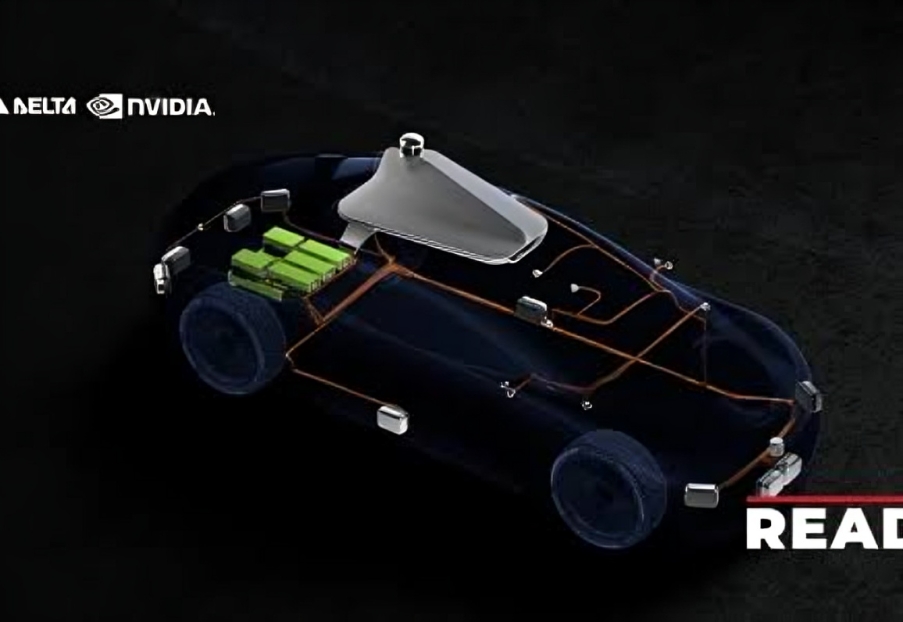
The company did not announce any commercial products to be launched. However, the collaboration focuses on introducing integrated automotive solutions by embedding Delta’s core hardware technologies directly into the NVIDIA Hyperion architecture.
Delta Electronics will contribute electronics hardware and integration expertise covering automotive energy management, xEV powertrain systems, power electronics, system integration, and in-vehicle high-performance computing (HPC). These technologies are crucial for autonomous vehicles because advanced systems depend not only on AI-based perception and decision-making but also on a reliable power supply, vehicle computing, and the integration of multiple electronic components.
To provide reference sensor and computing platform, NVIDIA Hyperion is developed and introduced as a modular architecture and end-to-end platform that integrate computer hardware, multimodal sensor and safety software into a single unit for autonomous vehicles.
The specific roles of this platform include integrating dual NVIDIA DRIVE AGX Thor centralised computers for handling level 4 autonomous driving tasks, a standardised sensor architecture for achieving full 360-degree environmental perception, and the NVIDIA Halos safety system, which offers safety mechanisms that satisfy automotive safety standards, including ISO 26262 ASIL-D requirements.
The collaboration highlights the efforts towards advancing AI-driven autonomous-driving solutions and expanding opportunities in smart mobility. It demonstrates the further steps towards merging AI, high-performance in-vehicle computing, automotive power electronics, sensor system, and functional safety in the development of level 4 autonomous vehicle.