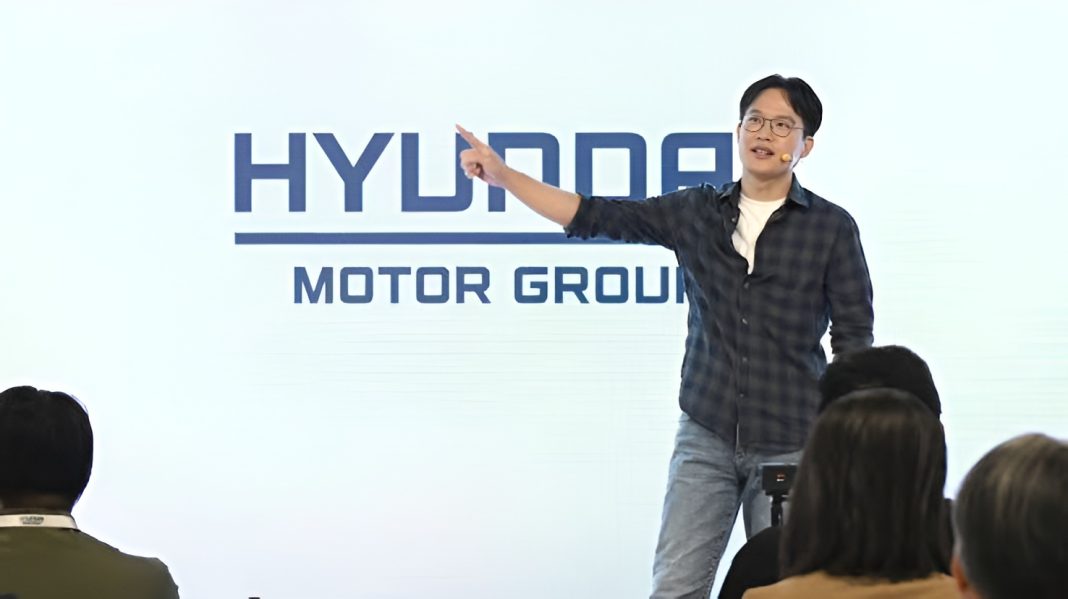

Hyundai Motor Group showcased its future mobility technology at the FISITA World Mobility Summit 2026, held on November 4-5 in Hwaseong, South Korea, focusing on artificial intelligence (AI), vehicle electrification, and autonomous driving. The company presented multi-core electrification strategies for Battery Electric Vehicles (BEVs), Hybrid Electric Vehicles (HEVs), Extended-Range Electric Vehicles (EREVs), and Fuel Cell Electric Vehicles (FCEVs).
“Hyundai Motor Group will continue to strengthen its competitiveness in key future mobility technologies and continue to participate in technology exchange and collaboration across the global automotive industry to contribute to the development of the future mobility sector,” said Chang Hwan Kim, Executive Vice President and Head of the Electrification Energy Solutions Tech Unit at Hyundai Motor Group.
During the summit, Manfred Harrer, President and Head of R&D Division at Hyundai Motor Group, presented the company’s electrification strategy, in which multiple powertrain technologies were introduced featuring next-generation battery pack architectures, digital control systems, extend driving range, next-generation hydrogen storage tanks, and infrastructure solutions. The primary purpose of introducing multiple powertrain technologies is to respond to changing market requirements and customer preferences.
The Growth of SDVs and AI
The summit also addressed the growing importance of software-defined vehicles (SDVs) alongside artificial intelligence (AI), as company technology leaders view SDVs as vehicles whose functions and performance can be improved by combining engineering expertise with AI-based digital capabilities to strengthen future vehicle development.
Apart from technology discussions, Hyundai Motor Group showcased multiple technology solutions related to mobility which cover Genesis GV90, Hyundai TUCSON, battery pack, hydrogen storage, and robotics platform. The Genesis GV90 provides advanced vehicle architecture supporting connected vehicle functions and next-generation electronic systems.