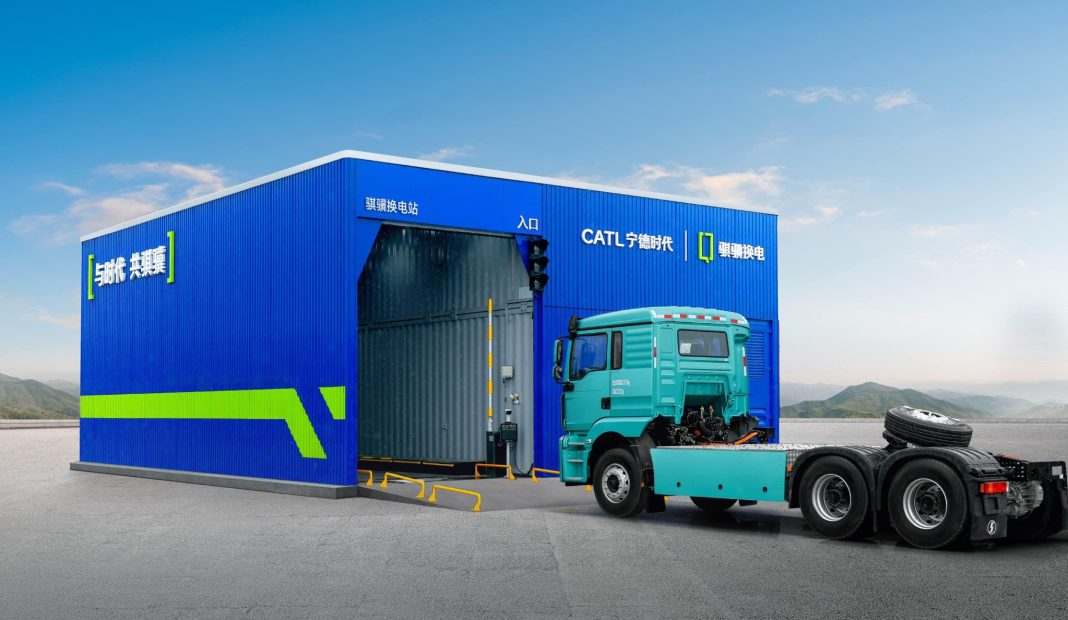

Chinese battery producer CATL unveiled a dual-electric range-extender battery system for heavy-duty electric trucks on 20th October 2026. The pack features a large, swappable battery and an onboard battery that adds driving range.
The primary battery is offered with the listed capacities of 432 kWh or 513 kWh, while the further range-extension battery provides an extra 77 kWh. Operators can also simply swap out the main battery at compatible swap stations without having to wait for a charging session to complete.
The architecture aims at freight operators, who find vehicle downtime, cost of batteries, and adaptability of routes major issues in running vehicles. The primary swappable battery has been separated from the reserve battery to potentially increase utilisation of batteries and reduce some of the financial hurdles to electrify heavy trucks.
CATL is developing the system as part of its QIJI battery swapping ecosystem. The firm is planning to increase the number of sites for electric heavy-duty vehicles.
Battery swapping could benefit high-utilisation freight routes with predictable demand, but they have to use standardised batteries and vehicles built to use them, and require significant infrastructure investment and other factors to ensure stations will be viable.
Building two batteries also complicates engineering. Automakers need to look at the battery packaging for both battery packs, safety features and the control strategy.
Why it matters
Swappable batteries and the energy content stored in internal reserves could see battery electric trucks become the norm, entering the realm of the possible for commercial freight hauliers working to a timetable.