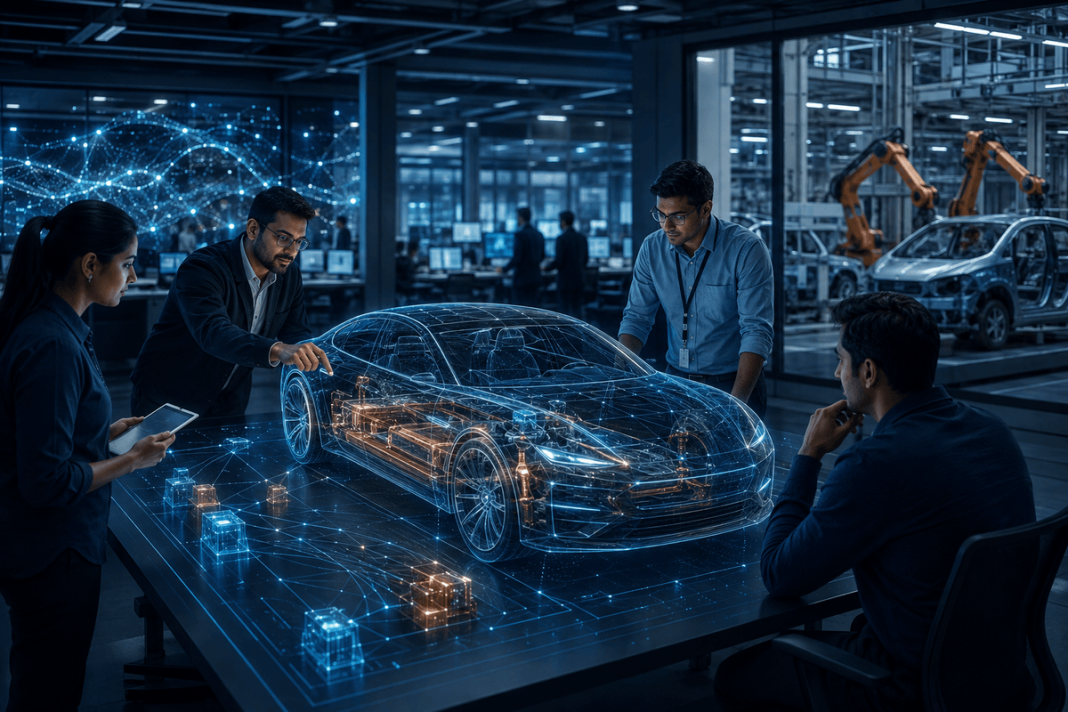

India’s relationship with the global automotive industry is changing. The old description—an efficient location for IT services and engineering support—no longer captures the depth of work moving through Indian technology organisations. Increasingly, Indian teams are being asked to help shape how vehicles are engineered, factories are operated, data is used and software-defined experiences are delivered at scale. The important shift is from supplying software capacity to owning the difficult middle layer between an AI concept and an industrialised automotive solution.
The TCS–Porsche partnership signals a deeper shift from outsourced IT to AI-led engineering, manufacturing and software-defined mobility. The latest evidence is a five-year strategic collaboration between Tata Consultancy Services and Porsche. TCS will establish an AI Mobility Centre of Excellence for the sports-car manufacturer, with the partnership intended to apply artificial intelligence across manufacturing, engineering, operations and customer experience. TCS has also announced a proposed acquisition, through a subsidiary, of 100% of MHP Management- und IT-Beratung GmbH, subject to regulatory approvals.
MHP brings capabilities in business transformation, AI, SAP, manufacturing digitalisation and connected mobility. Combined with TCS’s scale, the proposition is not a conventional IT outsourcing contract. It is an attempt to move AI ideas from isolated pilots into secure, repeatable and enterprise-grade systems across the automotive lifecycle.
AI Has to Work Across the Vehicle Lifecycle
In automotive engineering, AI value is unlikely to come from one spectacular application. It comes from connecting hundreds of decisions:
- Using data to identify design issues earlier
- Accelerating simulation
- Helping engineers search complex knowledge bases
- Improving software testing
- Shortening the loop between field feedback and product development.
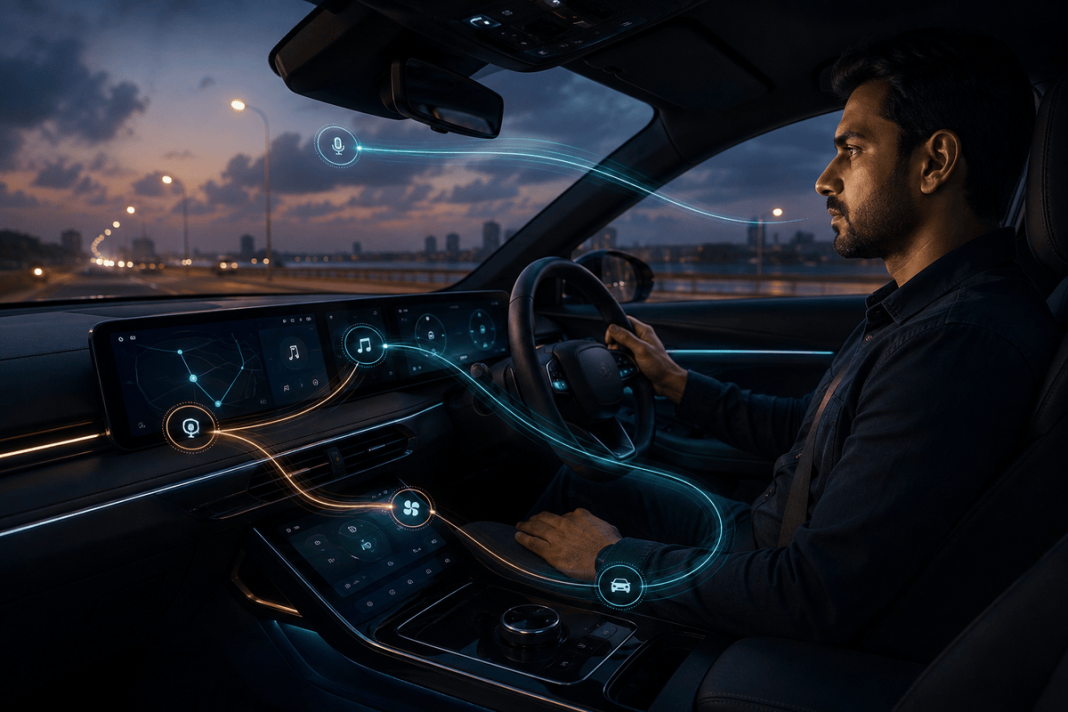
On the factory floor, AI can support visual quality inspection, predictive maintenance, production planning and energy optimisation. In operations, it can help manage parts flows, warranty signals and service requirements. In the customer domain, it can enable more relevant digital services and more responsive ownership experiences. The technology becomes strategically useful when these applications share trusted data foundations, governance and reusable platforms.
That is also where automotive work becomes hard. A compelling demonstration is not the same as a production system. Data may sit in disconnected engineering and enterprise platforms. Models need security, observability and human oversight. Changes have to coexist with established vehicle-development processes, supplier relationships and safety responsibilities. Scaling across plants, markets and vehicle programmes requires far more than selecting a model.
Why the Indian Ecosystem Should Pay Attention
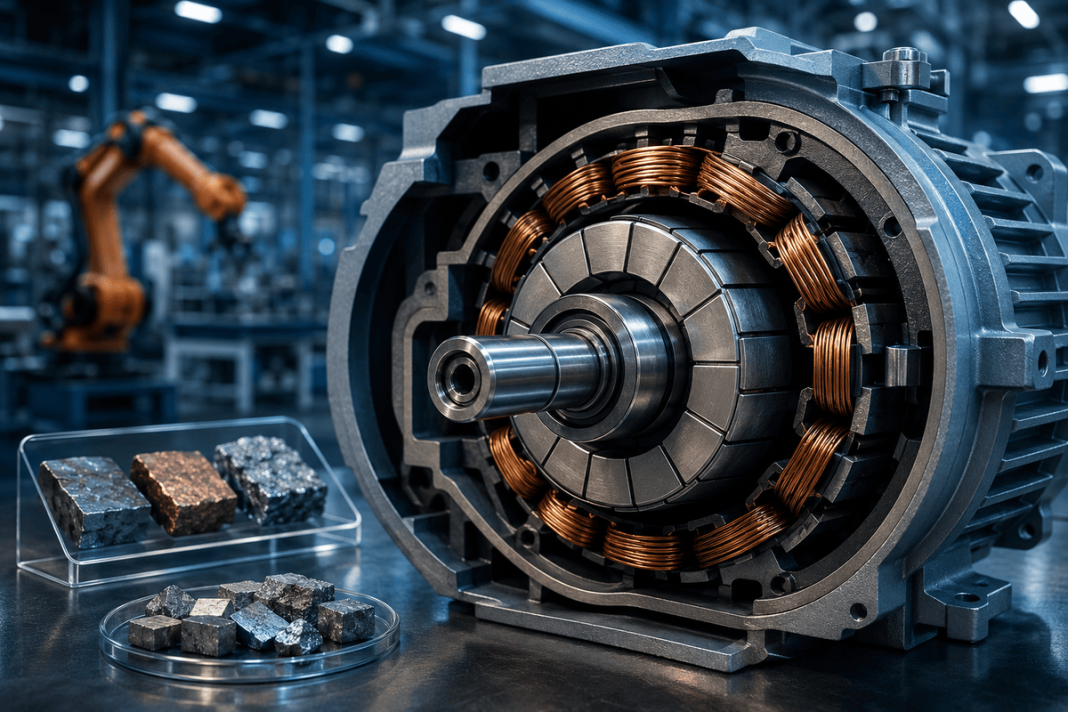
The partnership creates a useful signal for Indian automotive technology companies. The next competitive frontier is not measured simply in software headcount. It will be measured in domain depth: understanding vehicle architecture, production systems, cloud and edge computing, enterprise platforms, cybersecurity and the economics of industrial change.
Indian engineering service providers, Tier-1 suppliers and product companies can participate in this shift if they build reusable intellectual property and take responsibility for outcomes. That might mean a validation platform for software-defined vehicles, a data product for manufacturing quality, an AI-assisted engineering workflow or middleware that helps a vehicle programme manage software across variants.
It also demands closer collaboration between automotive and digital teams. Vehicle engineers understand constraints such as timing, safety and physical behaviour. Software and AI specialists bring expertise in data, models and scalable platforms. The organisations that create shared methods—and a shared language—between those disciplines will move faster than organisations that simply place them in adjacent departments.
A More Mature Definition of Mobility Intelligence
The TCS–Porsche announcement should not be read as an autonomous-driving programme or a promise that generative AI will directly control vehicle motion. Its importance is broader and more practical: it positions AI as an operating capability across the mobility enterprise.
That makes the partnership a marker of India’s evolving place in global automotive value creation. The country is not only writing code to a specification. It is developing the capacity to combine engineering, manufacturing, enterprise technology and AI into platforms that influence how a global vehicle company works. That is a more demanding role—and a far more valuable one.