
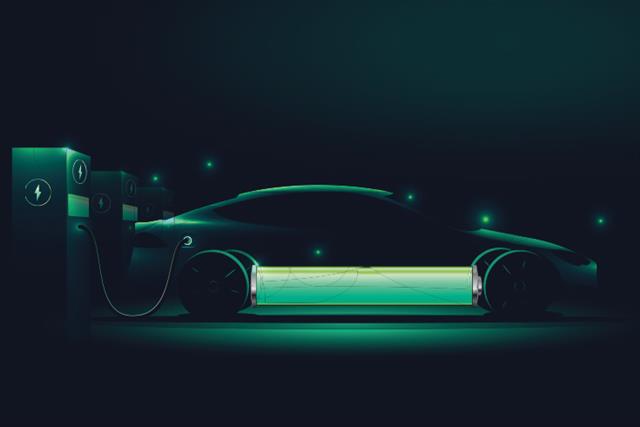
Bigger Battery Metal Costs Could keep Electric Cars Expensive

A surge in battery metal prices means it could take several years longer for electric vehicles to become as affordable as conventional cars.
Prices of lithium, cobalt and nickel have soared in the past year, eating into EV makers’ margins at a crucial point in the development of the burgeoning industry. With demand climbing, they now face a dilemma: swallow the incremental costs, or try passing them on to consumers.

Before the rally, battery prices were nearing levels that would make upfront costs of EVs competitive with traditional cars without state subsidies. But that’s now starting to change. Battery pack prices are set to rise this year for the first time in more than a decade, and broader inflation could severely delay a crucial tipping point where average battery prices fall below $100 a kilowatt-hour.
“Reducing battery pack prices to $100 a kilowatt-hour is now an achievable goal with the emerging generation of battery chemistries and cell designs,”. “However, if raw-material prices remain elevated, or climb further, this point could be delayed by several years.”

One measure of lithium prices has spiked more than fivefold over the past year, while cobalt and nickel prices also have climbed.

There are some signs of relief for carmakers, however, with lithium, cobalt and nickel prices retreating or steadying in recent weeks. And while long-term prospects remain strong, Goldman Sachs Group Inc. expects the price of those three crucial metals to ease in the next two years as producers race to bring on new supply.

At the same time, sticker prices for conventional cars are rising, as well, and high fuel prices are making EVs more attractive.

“The rising cost of batteries does not derail near-term EV adoption,” . “Some of the factors that are driving high battery raw-material costs — war, inflation, trade friction — are also pushing the price of gasoline and diesel to record highs.”

Hot this week

L&T Technology Services Introduces SDVault.ai, an AI-Powered Toolchain for Software-Defined Vehicles

L&T Technology Services announced the launch of SDVault.ai on...

EV Efficiency Explained: Wh/km, Regenerative Braking, Aerodynamics and Thermal Losses

Electric vehicles (EVs) are mobility products powered partially or...

CATL Explores Lithium-Air Battery Technology to Advance Next-Generation Electric Vehicles

​CATL, the world’s largest manufacturer of energy storage batteries,...

KAIST Develops Semiconductor-Based Interface Technology to Extend Anode-Free EV Battery Life

Researchers from the Korea Advanced Institute of Science and...

GÖPEL Electronic Joins Automotive SerDes Alliance to Support ASA-ML Automotive Networking

High-speed communication technologies are becoming increasingly important in modern...

Topics

EV Efficiency Explained: Wh/km, Regenerative Braking, Aerodynamics and Thermal Losses

Electric vehicles (EVs) are mobility products powered partially or...

CATL Explores Lithium-Air Battery Technology to Advance Next-Generation Electric Vehicles

​CATL, the world’s largest manufacturer of energy storage batteries,...

KAIST Develops Semiconductor-Based Interface Technology to Extend Anode-Free EV Battery Life

Researchers from the Korea Advanced Institute of Science and...

GÖPEL Electronic Joins Automotive SerDes Alliance to Support ASA-ML Automotive Networking

High-speed communication technologies are becoming increasingly important in modern...

Hyundai Motor Group Outlines AI-Driven Roadmap for Electric and Autonomous Vehicle Technologies

​Hyundai Motor Group showcased its future mobility technology at...

Infineon and Qualcomm Partner to Advance Central Computing for Software-Defined Vehicles

​Infineon and Qualcomm Technologies have signed a collaboration agreement...

Related Articles

Popular Categories