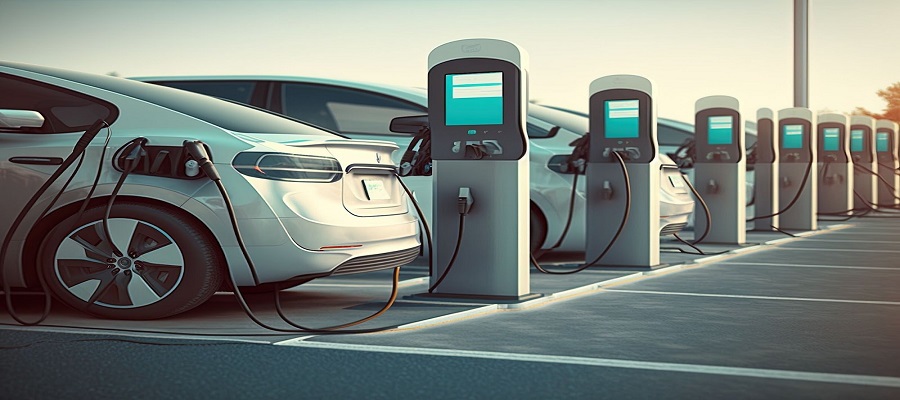

As the world transitions towards a sustainable future, electric vehicles (EVs) are gaining widespread popularity due to their eco-friendly nature and energy efficiency. The rapid adoption of EVs has spurred an unprecedented demand for electric vehicle charging infrastructure, both in India and globally. In this blog, we will delve into the soaring demand for EV chargers, the current state of charging solutions in India, and the industry’s projected growth.
EV Charger Makers Dominating the Market
EV charger manufacturers have witnessed remarkable success in capturing a significant share of both the residential and public charging segments. Reports suggest that they account for an impressive 80% of the residential charging market and nearly half of the public charging market. This success is primarily attributed to their continuous efforts in innovating and producing efficient, user-friendly, and cost-effective charging solutions.

The Current State of EV Charging Solutions in India
By the end of 2022, India boasted approximately 2,700 public charging solutions, accompanied by a network of 5,500 charging connectors. This significant growth in charging infrastructure has been driven by various government initiatives and private sector investments in the EV ecosystem. Industry analysts predict that India will witness further expansion, with the number of public charging solutions expected to reach 10,000 by 2025.
The Mounting Challenge: Meeting Future EV Infrastructure Needs
With the rising popularity of EVs, the demand for charging infrastructure is projected to soar exponentially. As per estimates, India needs a staggering 20.5 lakh charging stations by 2030 to accommodate the growing fleet of electric vehicles. Such a colossal task presents various challenges, including the need for massive investments, technological advancements, and robust policy frameworks to support this ambitious goal.
Global EV Charger Market Growth
The surge in the demand for electric vehicles has translated into substantial growth in the global electric vehicle charger market. In 2022, the market size was valued at $7.2 billion, and industry projections indicate that it is set to soar to a whopping $91.2 billion by 2032. From 2023 to 2032, this remarkable growth showcases an impressive Compound Annual Growth Rate (CAGR) of 29.3%.
Conclusion
As the world strives towards a sustainable future, the demand for electric vehicles and the associated charging infrastructure continues to surge. India, in particular, has witnessed significant growth in its EV charging solutions, with further expansion expected in the coming years. However, the task of establishing a massive network of charging stations by 2030 remains a formidable challenge. Collaborative efforts between governments, private sectors, and stakeholders are crucial to overcoming obstacles and creating an eco-friendly and energy-efficient transportation landscape for generations to come. With the global EV charger market poised for exponential growth, the stage is set for a green revolution in the automotive industry.