
As Sri Lanka is engulfed by its economic crisis, the new destination for Indian auto companies seems to be Bangladesh which is on the brink of a major economic boom, spurring auto majors to look eastwards.
Tata Motors, Ashok Leyland, Mahindra, and Bajaj Auto have stepped up their game through joint ventures and begun identifying homegrown distributor groups to assemble a major portion of their products in Bangladesh. These companies are firming up launches and ramping up capacity as they offer a very high level of customization to customers, reinforcing the product portfolio across all segments in the region, experts said.
“Automobile majors are working with the government, industry associations, and SIAM (Society of Indian Automobile Manufacturers) to help develop an auto policy that serves the needs of customers and the local industry. We are looking forward to introducing high-end bikes, fuel-efficient CNG 3Ws, and in due course, EVs”, said Rakesh Sharma, ED, Bajaj Auto, a leader in 2&3 wheelers in Bangladesh.
“We actively support our distribution partners through local manufacturing, financing, and go-to-market operations”, added Sharma.
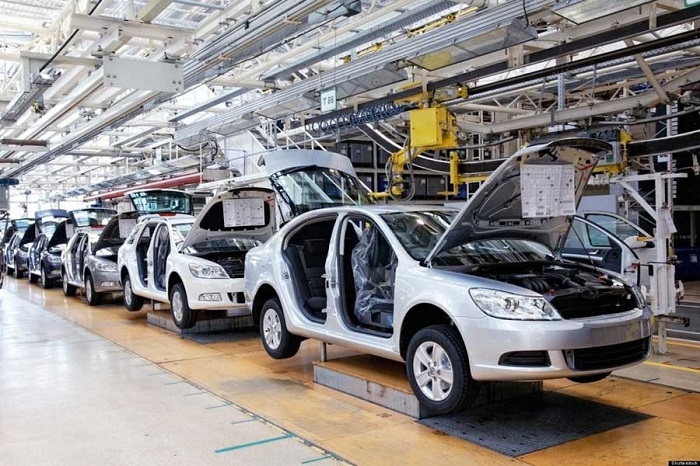
Tata Motors is the largest commercial vehicle brand, including small & heavy CVs and buses in Bangladesh with a two-third share. “It continues to invest in Bangladesh in developing a suitable product portfolio to serve our customers, building a wide network of sales & services, and expanding our CKD assembly facility in Jessore”, said a TAMO spokesperson.
Indian auto OEMs have focused on building their presence in the South Asian, African, and Middle Eastern markets over the last few decades. In the economic downturn caused by Covid, the Bangladesh market continued to sparkle while most others suffered, said Kaushik Narayan, CEO of Leaptrucks, a platform for the sale of trucks and buses.
Emission standards in Bangladesh also lag behind India’s and other developed nations. With a wide range of value-for-money products available in their portfolio across multiple emission standards, matching terrain and weather conditions, Indian OEMs are uniquely positioned to cater to the requirements of the Bangladesh market, Narayan said.
Indian auto OEMs are capitalising on this growth story in Bangladesh by making substantial investments in JV and assembly operations. It’s an India-like market, so auto OEMs find it easier to serve such customers, said Kavan Mukhtar, head, of auto practice, at PwC.
Mahindra Automotive, which works with the local partner Rangs Group, has established itself in the pick-up segment. In tractors, Mahindra is exploring possibilities of a local assembly of some specific products which will help the Bangladesh government in their program of ‘Make in Bangladesh.’
“We are also exploring possibilities in the aggrotech space to help farmers achieve higher yields and prosperity. Mahindra has partnered with the Karnaphuli Group and Rancon Group for distribution of products”, said a Mahindra spokesperson.
Chennai-based truck major Ashok Leyland, through its channel partner IFAD Auto, sells 65% of its locally assembled Light and Medium commercial trucks and buses in Bangladesh. “The plant includes a bus body assembly facility and cab weld line, a first of its kind in Bangladesh. We shall continue to promote locally assembled products which strengthen the local economy, develop suppliers base and provide local job opportunities,” said the Ashok Leyland spokesperson.
Ashok Leyland is currently the market leader in the bus and 16T (Medium and Heavy commercial vehicle MHCV) segment. “Our LCV platform, Dost, is well accepted in Bangladesh and we are looking forward to the launch of Phoenix, our new 3.5T LCV in FY23. Our 10-14T ICV platform is also gaining market share and we look to enhance its sales through added features”, he added.
Indian passenger vehicles, two and three-wheelers, light trucks, and buses saw an average sales growth of 15-20% in Bangladesh in the last 2-3 years despite the dominance of Japanese reconditioned vehicles.