

The vision of Vehicle-to-Grid (V2G) technology has long tantalized those envisioning the future of electric vehicles (EVs) and seeking to enhance overall system resiliency and efficiency. While V2G has seen limited adoption, recent developments, such as Tesla’s Powershare, indicate a promising shift towards making this concept a widespread reality. However, significant challenges persist on both the grid and vehicle fronts.
Grid Challenges and Renewable Energy Integration:
Grid operators face the challenge of incorporating variable renewable power sources, requiring tools to smooth out energy fluctuations. The battery capacity of EVs presents a potential solution, with enthusiasts envisioning aggregated vehicles forming virtual power plants, aiding in load balancing and emergency power supply. Implementing this vision necessitates sophisticated software and possibly AI/ML to assess both grid and dispersed vehicle battery pack conditions.
Vehicle Challenges and Impact on Battery Systems:
V2G introduces challenges within vehicles, impacting battery health, range, state of charge (SOC), and depth of discharge (DOD). Concerns arise about leaving EV owners with insufficient charge when needed and potential damage to battery life. While some research suggests V2G could contribute to healthy battery cycling, best practices remain unclear.
Aggregation and Information Sharing:
To optimize V2G, aggregating the storage resources of numerous vehicles and managing them collectively is a potential solution. Groupings based on factors like geography or usage patterns could play a role, requiring substantial sharing of SOC and lifestyle information. AI/ML can facilitate this process, contributing to more efficient power usage and sharing.
Enhancing EVSE Electrical Efficiency:
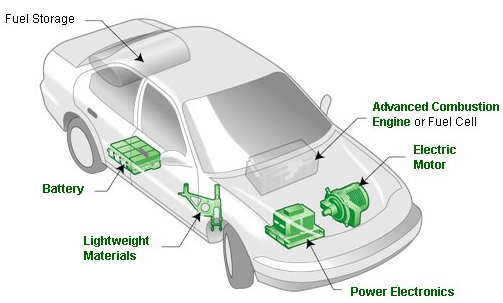
Efficiency in bidirectional energy transmission, especially from Electric Vehicle Supply Equipment (EVSE), is critical. Viewing the entire charging system holistically, from individual batteries to power electronic units, connectors, cables, and converters, is essential to minimize energy losses and ensure cost-effectiveness.
V2G Communications and Intelligence:
Communication among vehicles, homes, charging stations, and utilities is crucial for V2G success. Existing standards like ISO 15118, SAE J2847, SAE J1772,3, CHAdeMO, ISO 61850, and Open Charge Point Protocol (OCPP) aim to address these communication challenges. However, the dynamic nature of EVs and the need for high-bandwidth, secure communication present operational complexities.
Conclusion:
While the integration of EVs into the grid holds immense potential, challenges persist in achieving widespread V2G implementation. Innovations in software, communication standards, and AI/ML technologies are essential to overcome hurdles, ensuring the seamless integration of electric vehicles into the evolving energy landscape.


 technology has long tantalized those envisioning the future of electric vehicles (EVs) and seeking to enhance overall system resiliency and efficiency. While V2G has seen limited adoption, recent developments, such as Tesla's Powershare, indicate a promising shift towards making this concept a widespread reality. However, significant challenges persist on both the grid and vehicle fronts.)