
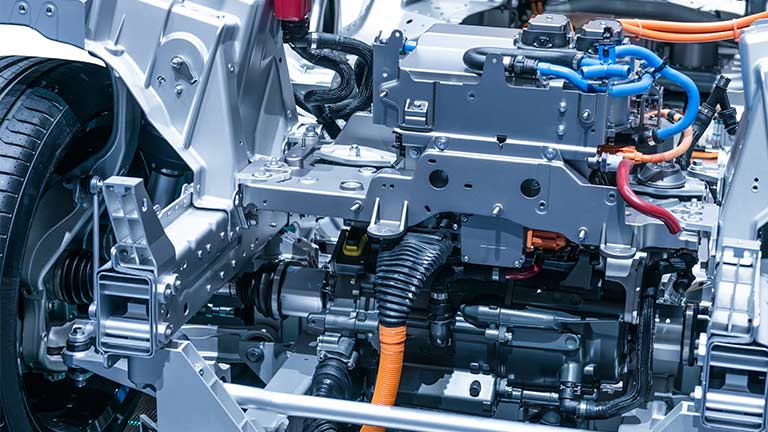

The emergence of EVs in the twenty-first century has led to the creation of a different category. Not just from a business perspective but from an innovative perspective as well. The 21st century could be summed up as the century of innovation. And now the innovative engineers are preparing to add another feather to their cap by introducing a 48V automotive energy system.
The world has been the witness of the 12 V automotive energy system dominance for the last 70 years. The introduction of 48V can very well create a sense of caution for the admirers of the 12V system as it brings a few game-changing advantages which the OEMs have been looking forward to. Let’s understand this innovation through this blog.
48V electrical system due to its high capacity significantly reduces the current level that the wiring harness supplies to the high power subsystems which would enable the lighter and smaller gauge wires to come into the picture. Furthermore, the use of lighter and smaller gauge wire would end up reducing the weight and cost.
For example, Transmitting 33.33A over a 12ft. distance typically requires 8AWG cable, which weighs approximately 0.4 kg (0.9 lbs) per meter. In contrast, transmitting 100A over the same distance necessitates a much heavier 2AWG cable, weighing around 2.3 kg (5 lbs.) per meter. Using the 36V system instead of the 12V system results in approximately 83% less weight in cables (1.2 kg vs. 6.9 kg), showcasing substantial weight savings.
The engineers are predicting the 48V system will capture the market in a few years completely. But is it even possible? The dominance of the 12V system has been so great that it also oriented the architectural design of contemporary vehicles. To incorporate the 48V system the architecture would need to undergo a significant change which would ultimately require a considerable amount of time.
So far, Tesla seems like the only manufacturer to have completely embraced 48V power, starting with its upcoming CyberTruck. As a result, they have implemented design changes aimed at removing the 12V bus from several of their existing models. In addition to the previously mentioned advantages, the news is circulating that they have already created their own “secret” accessories team focused on creating products tailored for the 48-V architecture, including lighting, winches, and air compressors.
Now according to the statements from different engineers, the system would require a few more years to become usual. However, innovation has always surpassed human expectations. Then how much time should it take exactly? Well, fate knows better.