
A powertrain in an electric vehicle is a combined setup of different components which includes energy storage devices, energy conversion units, an electric motor for converting electrical energy into mechanical torque and transmission for transferring the produced torque to the wheels.
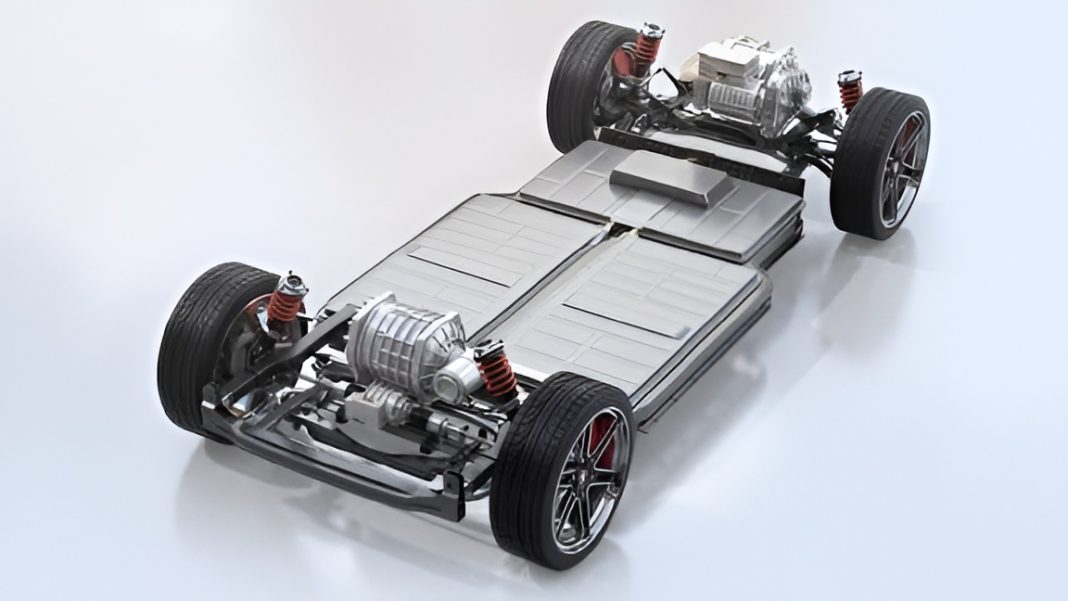
The complete powertrain setup isn’t centralised at one location; rather, it is distributed across the vehicle’s chassis. This provides balanced weight distribution for the car, improved crash safety, maximised interior space for passengers, and dynamic control while turning the car. It works from storing energy to rotating the wheels. Below is the list of components that come under the powertrain, along with their functionalities.
- High-Voltage Battery Pack: It stores electrical energy from the charging station in chemical form inside the cell and delivers it as direct current, when the energy passes to the inverter. Battery packs are mounted horizontally along the skateboard platform between the front and rear axles. This placement of battery cells provides better vehicle stability by lowering the centre of gravity. The conversion of chemical energy to DC happens inside a battery through a spontaneous electrochemical reaction.
- Battery Management System (BMS): It is a combination of hardware and software that monitors current, voltage, and temperature across the entire battery unit. It calculates critical performance metrics such as State of Health (SoH), State of Charge (SoC), State of Power (SoP), and State of Energy (SoE) to analyse the overall battery performance and show the real-time performance of the battery to the driver so that he knows how much range he can cover with the remaining energy and also alerts the driver during any risk to the battery. The BMS communicates with different components through internal chip-to-chip links, automotive-grade serial buses, and wireless communication.
- Inverter: It is a physical device located on top or on the side of the electric motor. The primary purpose of this device is to convert DC coming from the battery into the required AC for operating an electric motor. The other job role for this device includes controlling the amplitude and frequency of AC as per the acceleration demanded by the driver and converting AC to DC for charging the battery when an electric vehicle slows down while applying brakes. It determines how fast and hard the motor spins when the driver presses the accelerator pedal.
- Electric Motor (Traction Motor): It is the core hardware component in an electric vehicle that converts electrical energy into mechanical energy to rotate the wheels. It receives energy in the form of AC from the inverter as these motors must create a rotating magnetic field to interact with the rotor’s magnetic field which results in torque production following Lenz’s law.
- DC-DC Converter: It is also known as voltage regulator, integrated into the power electronic assembly. It converts high voltage DC power from the main lithium-ion traction battery into a lower DC voltage suitable for operating low- power systems like displays, infotainment, and lights. It also keeps the output voltage stable even if the input power source fluctuates and filters out unwanted noise, voltage spikes, and electrical ripples using internal inductors and capacitors.
- Onboard Charger: It is a charging unit integrated into an electric vehicle and its main task is to convert the AC from the power station into DC to store energy inside the battery. It also regulates power flow using constant-current and constant-voltage managed by its internal power electronics and the vehicle’s BMS.
- Single-Speed Transmission / Reduction Gear: It converts high RPM (rotations per minute) from the electric motor into a suitable speed to be delivered to wheels, allowing the car to start moving and maintain smooth power delivery throughout the distance covered by the vehicle. It uses a single permanent gear set. Because an electric motor can produce instant, peak torque from zero RPM, electric vehicles eliminate the need for multi-speed gear shifting, clutches, and torque converters.
Conclusion
An electric vehicle powertrain is a complete integrated set of components that work together to deliver safe and reliable vehicle operation. The battery stores electrical energy, the inverter converts this energy into the required form to power the electric motor, which in turn converts electrical energy into mechanical energy for rotating the wheels.