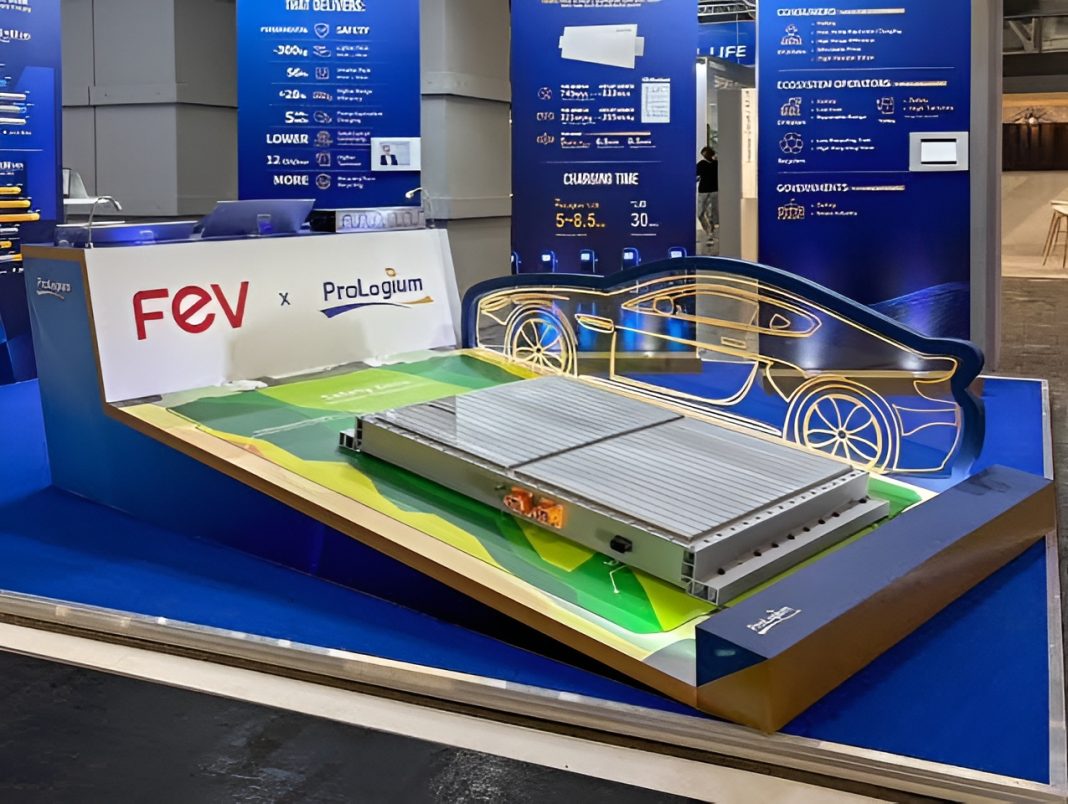

Battery technology plays a central role in describing the performance and driving range of an electric vehicle. The more advanced and efficient the battery technology, the better the overall performance of an electric vehicle will be. With advancements in battery technology over time, ProLogium, a battery developer company has officially announced its Dynamic Coordination Network (DCN) electrolyte architecture for its next-generation GEN4 battery technology.
The purpose of introducing this technology is to showcase advancement in electrolyte design, combining characteristics of liquid and solid electrolytes. The company aims to address key challenges in next-generation batteries such as charging speed, ion transport and battery performance.
DCN Electrolyte Architecture Targets Faster Charging
Electrolyte is a key factor in battery technology, determining how well the battery works, how long it lasts, and how safe it is. It enables lithium ions to move between positive and negative electrodes during charging and discharging. The physical and chemical properties of an electrolyte such ionic conductivity, viscosity, transference number, electrochemical stability window, and solid electrolyte Interphase (SEI) influence charging performance, energy efficiency and battery operation.
The role of ProLogium’s DCN architecture is the coordination of lithium ions within the electrolyte, aiming to improve ion transport and support fast charging in its next-generation battery technology.
As per the company’s report on internal test results, the battery can charge from 5% to 80% in 6.4 minutes. This figure is from the company’s end and should not be considered as independent verification of performance on a production electric vehicle. Charging time in real-life scenarios depends on many factors like battery temperature, charger capacity, cell design, and the battery management system.