
Anwesh Koley, Executive Editor, ELE Times
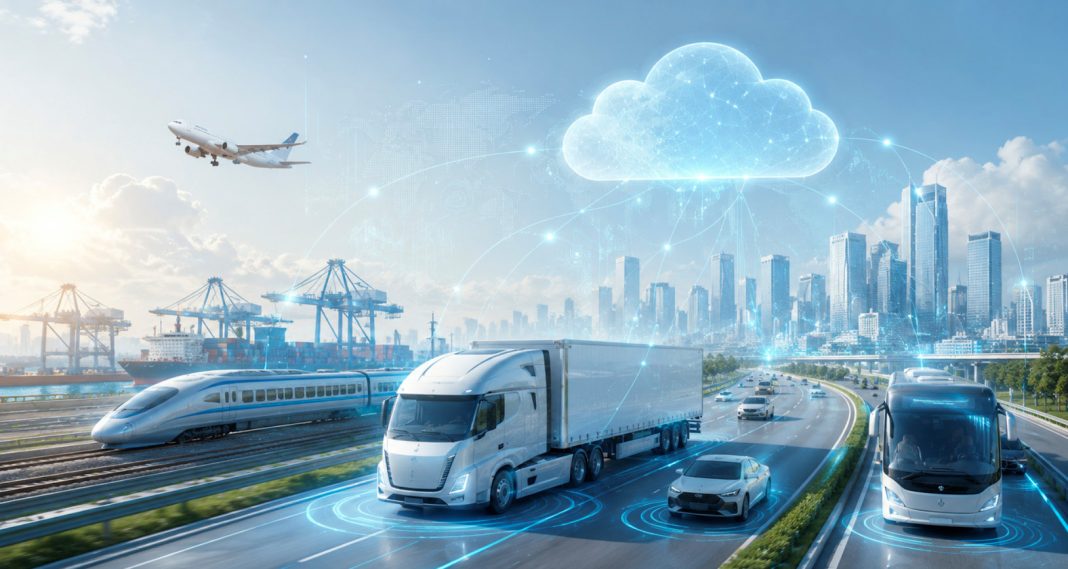
Players in the mobility and transportation space are becoming more aware of the promise of digital transformation. Responding to the global challenges sparked by logistical bottlenecks, manpower shortages and supply chain disruptions, companies are turning to data and IT to streamline operations and maximize profits. Modern DevOps tech stacks ensure optimized AI control through AI-assisted testing, natural language execution platforms, and unified compliance platforms.
Transportation technology across the globe is adequately benefiting from transformational capabilities, including unified functional performance testing and long-term viability testing with a single prompt. This allows business operators and users to write automation test cases, and provides the ability to take written security policies. Once done, they can successfully enforce them continuously across on-premises, hybrid, and multi-cloud environments.
Cloud-Native Infrastructure Testing
Benchmarking to Cloud-Native Infrastructure Testing provides a comprehensive validation solution for benchmarking the design, deployment, and management of cloud-native 5G SA network environments. This technology effectively controls automated guided vehicles (AGVs) and mobile robots on factory floors with sub-10 millisecond latency. The capacity to validate infrastructure readiness before CNF deployment will reduce the risk of degraded quality of service, outages, wasted investments, and delayed service launches.

“Cloud-native complexity has slowed down the pace of 5G SA adoption because operators need confidence that their infrastructure can reliably support CNF workloads,” says Anil Kollipara, Vice President and General Manager, Keysight Technologies. Automation testing solution providers are striving to offer the most holistic life cycle advantages that optimize, validate, and benchmark cloud-native infrastructures. The idea is to enable operators to bridge organizational gaps, reduce risk, and deliver the high-quality services their customers’ demand.
Cybersecurity service providers are offering holistic solutions that combine both cloud-native infrastructure benchmarking with advanced CNF validation for resiliency and scalability. In the long run, this enables CSPs to unlock the full potential of cloud-native transformation. This is a major step forward in ensuring 5G networks are reliable, resilient, and ready for the future.
Redefining DevOps with Kubernetes Technology
Businesses fast migrating towards a cloud-native data approach require software developers and the entire ecosystem to create more significant synergies between operations. An enhanced delivery approach is vital to raise the quality benchmarks even higher. Among the digital tools available to these businesses, one in particular has gained significant momentum in recent years: Kubernetes. This open-source system grants users a means of orchestrating cloud-based application bundles, or containers.
This proposition empowers organizations to become nimbler, reduce IT costs, and transform data into actionable insights. Therefore, a smart combination of Kubernetes and the hybrid cloud allows transportation companies to drive efficiency and innovation as well as data-driven growth.

Since its release, the popularity of Kubernetes as a technology has surged, owing to its containerization approach. “By virtualizing operating systems in the cloud, Kubernetes connects team members by sidestepping the accessibility and compatibility issues often associated with legacy infrastructure,” says Chris Hickey, CEO, Diamanti. For transport companies, this not only simplifies talent and fleet management—it also leads to considerable savings.
Delivering Growth with Real-Time Data
In the transportation industry, leaders know that data is a motor for growth. For this reason, it’s worth zooming in on how companies can get the most out of their data with Kubernetes. With quick access to secure and transparent data, businesses can gain peace of mind and dedicate their attention to what really drives growth: going the extra mile for their customers.
A cloud-native application bundle is a boon for transporters. On the road, it can collect and store data from IoT sensors, shipping manifests, customs documentation, and traffic and weather information. And because it’s available across the hybrid cloud, it can provide front- and back-end users anywhere with actionable insights on in-route delays, driver detention, or hours-of-service limits. These insights can then be leveraged to increase efficiency by reducing delays both in-route as well as at gas and weigh stations, warehouses, and ports.
Datapoints like these are not only imperative for improving load planning, dock scheduling, and package tracking, but they’re also important for ensuring security and regulatory compliance. Diamanti’s Kubernetes platform centralizes and secures every bit of this data. In addition to built-in analytics pipelines, the Diamanti interface features layers of cloud-native data protection (including end-to-end back-up and recovery) that automatically protect sensitive customer information and IP.
Given the vast amounts of data that are being generated by Industry 4.0, it’s no wonder that transportation leaders are often preoccupied with concerns over consumer data breaches and electronic logging device (EPL) rule alignment. A centralized approach to vehicular information assimilation, coupled with multi-layer automation, simplifies tasks. In addition to reducing server costs, this approach makes it easy to offload tedious, repetitive tasks and frees employees up to concentrate on innovating.
Enhancing Control and Trust for AI Workflows

As mobility enterprises move from AI experimentation to production-scale deployment, stakeholders are facing growing pressure to deliver measurable business outcomes, without compromising control over increasingly complex and expensive AI ecosystems. “The future of AI in the enterprise will be defined by how effectively organizations can control, scale, and operationalize AI workflows, models, and deliver real business results with clear visibility and traceability,” said Anjali Arora, CTO, Perforce.
Further, the need to prove AI ROI is no longer only a technology question but also an executive and board member need. There’s a lot of money being spent with AI, but the next evolution needs to be on the ROI of AI, which can only be measured if there are control mechanisms in place and visibility into what it’s doing.
The lack of clear visibility into where AI is being used, how it’s making decisions, how to optimize costs, and whether outputs meet security, compliance, and quality requirements creates operational, regulatory, and business risks that limit AI’s value within software delivery. Scaling AI across the software delivery lifecycle or AI lifecycle introduces new challenges around orchestration, governance, and compliance.
As AI goes from experimental to production-ready, many automotive OEMs and technology suppliers are still working to translate early productivity gains into durable operational value. Challenges persist around visibility, traceability, and control of AI within enterprises and highly regulated industries. As AI adoption accelerates, platform engineering teams are becoming central to balancing speed with control.
Envisioning An AI-Enabled Future
Future vehicles are expected to implement high-end AI technology, as they are supposed to work on autopilot systems. Hence, AI integration becomes important for future automotive manufacturing. Governments and authorities adopting sustainable technology while pushing the same agenda over the technology and automotive vendors are fuelling the demand for artificial intelligence and machine learning technology.
AI technology is not just part of the final automotive product but becomes an important part of its construction. AI-backed robots are helping the manufacturing of vehicles with higher precision. AI along with machine learning also navigates through traffic in an autonomous driving operation. The future of automotive companies using AI for their transformed transmissions is also boosting the sales of AI-integrated automotive systems.
The design and production of new vehicles using AI and automation are essentially driving the sales of fully digitalized electric vehicles. New vehicles have AI-integrated systems that observe the driver’s driving pattern and keep it in their systems for advanced guidance and assistance. It also provides data about the temperature settings, music, and ambiance. The integration of AI with machine learning, and Natural Language Processing (NLP), is another factor supporting AI market expansion in the automotive sector.