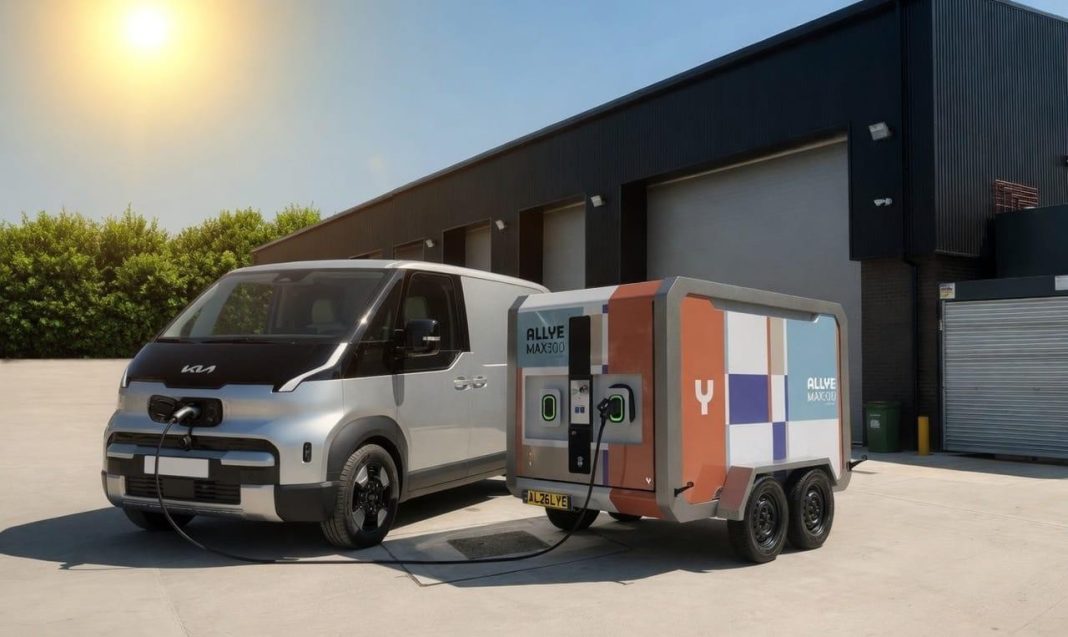

British energy-storage firm Allye Energy announced the commercial availability of its MEV (MAX for EV) charging system on 27 October 2026. A battery energy-storage system is integrated with an EV charger using used electric-vehicle battery packs.
The solution tackles one of the biggest problems facing the electrification of fleets: the relatively low electrical capacity at some depots. High-powered chargers may need costly grid upgrades, new electrical connection points, and extended infrastructure work.
Instead of drawing the power from the grid at the point of charging, for which it would need to draw from the network, the Allye MEV accrues energy from the electrical grid and dispenses it when vehicles require a charge. The system, the company says, is capable of outputting up to 400 kW across two cars at the same time, even on a 16-amp supply.
This strategy could enable fleet managers to make use of high-power charging at stations where the grid has limited capacity. It could also give old EV batteries a second life before they need to be recycled.
The system is designed and assembled in the UK, and the company said the batteries are sourced from UK-registered vehicles and around 95% of the material is from British sources.
However, the maximum charging output is not continuous under every working condition. Performance is dependent on energy in reserve, the condition of the battery, what is required in terms of charging, and the speed at which the energy reserves can be recovered.
Why it matters
This sort of battery-integrated charging capability could speed up commercial EV deployment without needing a large-scale depot upgrade right away.