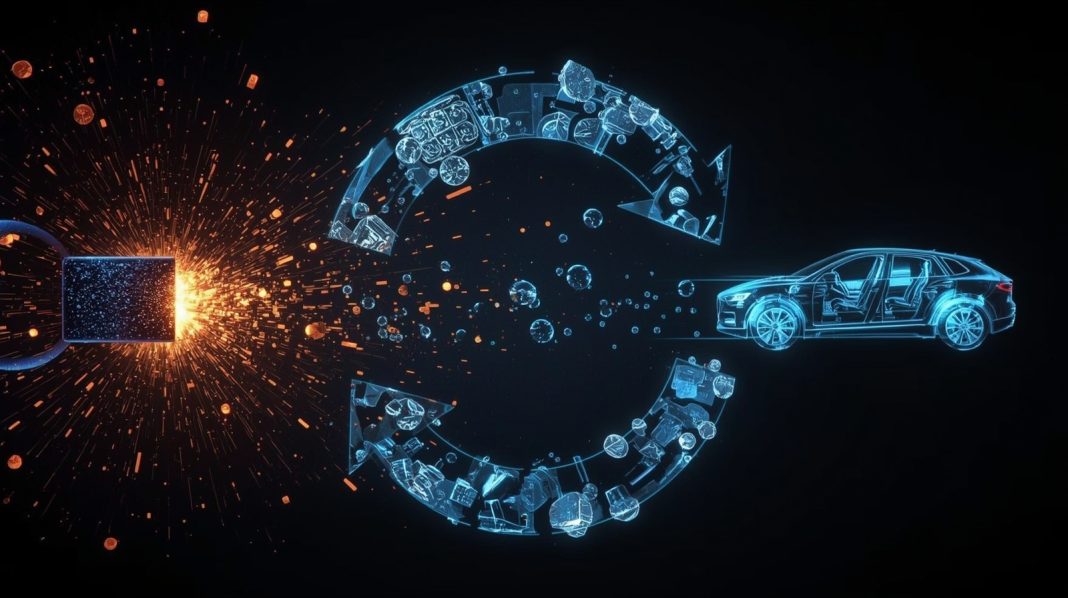

Nearly 95% of the metals in old batteries can be recycled and repurposed into new batteries, through various methods, each having its pros and cons. The adoption of a circular economy based on reusing and recycling has become central for maintaining a continuous EV production amid growing concerns regarding the scarcity of critical minerals like nickel, cobalt, and lithium.
Key recycling methods include: –
Hydrometallurgy
This, wet process uses water-based solutions, typically acids like sulfuric acid for copper and uranium leaching, cyanide compounds like sodium cyanide for gold extraction, and ammonia for some nickel and copper ores. This technique is more energy efficient and can recover a higher percentage of metals, including lithium.
Pyrometallurgy
This method involves smelting and roasting to recover valuable metals like cobalt and nickel, however, due to its high heat, materials like aluminium and lithium are lost in its slag.
Mechanical Recycling
This process involves the complete breakdown of the battery and its components through shredding, crushing, and sieving to separate all the components. The critical minerals like nickel, cobalt, and lithium are then extracted from the remaining ‘black mass’.
Direct Recycling
This method includes reusing functional components directly from the e-waste without further breaking it down. This technique is often used to recover the usable battery components, like the cathode and anode materials, without completely breaking down the chemical structure.
Regenerative Electro-hydrometallurgy
This technique is an advanced version of the regular hydrometallurgy, focusing on lithium ion batteries. It combines electrochemical and hydrometallurgical practices to recover high-purity metals from lithium-ion battery waste.
Apart from these battery recycling techniques, the concept of second-life applications is also gaining momentum to build on the sustainable usage of EV technologies. This involves reusing batteries for other purposes, like stationary energy storage, before they are fully recycled. This method is also, both beneficial and practical.