
The market for electric vehicles continues to gather pace with a strong volume growth of both battery electric vehicles and plug-in hybrid electric vehicles. The share of electric vehicles produced is expected to see double-digit growth by 2030 with a share of around 45 percent compared to 20 percent in 2024. Infineon Technologies AG is responding to the growing demand for high-voltage automotive IGBT chips by launching a new generation of products. Among these offerings are the EDT3 (Electric Drive Train, 3rd generation) chips, designed for 400 V and 800 V systems, and the RC-IGBT chips, tailored specifically for 800 V systems. These devices enhance the performance of electric drivetrain systems, making them particularly suitable for automotive applications.
The EDT3 and RC-IGBT bare dies have been engineered to deliver high-quality and reliable performance, empowering customers to create custom power modules. The new generation EDT3 represents a significant advancement over the EDT2, achieving up to 20 percent lower total losses at high loads while maintaining efficiency at low loads. This achievement is due to optimizations that minimize chip losses and increase the maximum junction temperature, balancing high-load performance and low-load efficiency. As a result, electric vehicles using EDT3 chips achieve an extended range and reduce energy consumption, providing a more sustainable and cost-effective driving experience.
“Infineon, as a leading provider of IGBT technology, is committed to delivering outstanding performance and reliability”, says Robert Hermann, Vice President for Automotive High Voltage Chips and Discretes at Infineon Technologies. “Leveraging our steadfast dedication to innovation and decarbonization, our EDT3 solution enables our customers to attain ideal results in their applications.”
The EDT3 chipsets, which are available in 750 V and 1200 V classes, deliver high output current, making them well-suited for main inverter applications in a diverse range of electric vehicles, including battery electric vehicles, plug-in hybrid electric vehicles, and range-extended electric vehicles. Their reduced chip size and optimized design facilitate the creation of smaller modules, consequently leading to lower overall system costs. Moreover, with a maximum virtual junction temperature of 185°C and a maximum collector-emitter voltage rating of up to 750 V and 1200 V, these devices are well-suited for high-performance applications, enabling automakers to design more efficient and reliable powertrains that can help extend driving range and reduce emissions.
“Infineon, as Leadrive’s primary IGBT chip supplier and partner, consistently provides us with innovative solutions that deliver system-level benefits,” said Dr. Ing. Jie Shen, Founder and General Manager of Leadrive. “The latest EDT3 chips have optimized losses and loss distribution, support higher operating temperatures, and offer multiple metallization options. These features not only reduce the silicon area per ampere, but also accelerate the adoption of advanced packaging technologies.”
The 1200 V RC-IGBT elevates performance by integrating IGBT and diode functions on a single die, delivering an even higher current density compared to separate IGBT and diode chipset solutions. This advancement translates into a system cost benefit, attributed to the increased current density, scalable chip size, and reduced assembly effort.
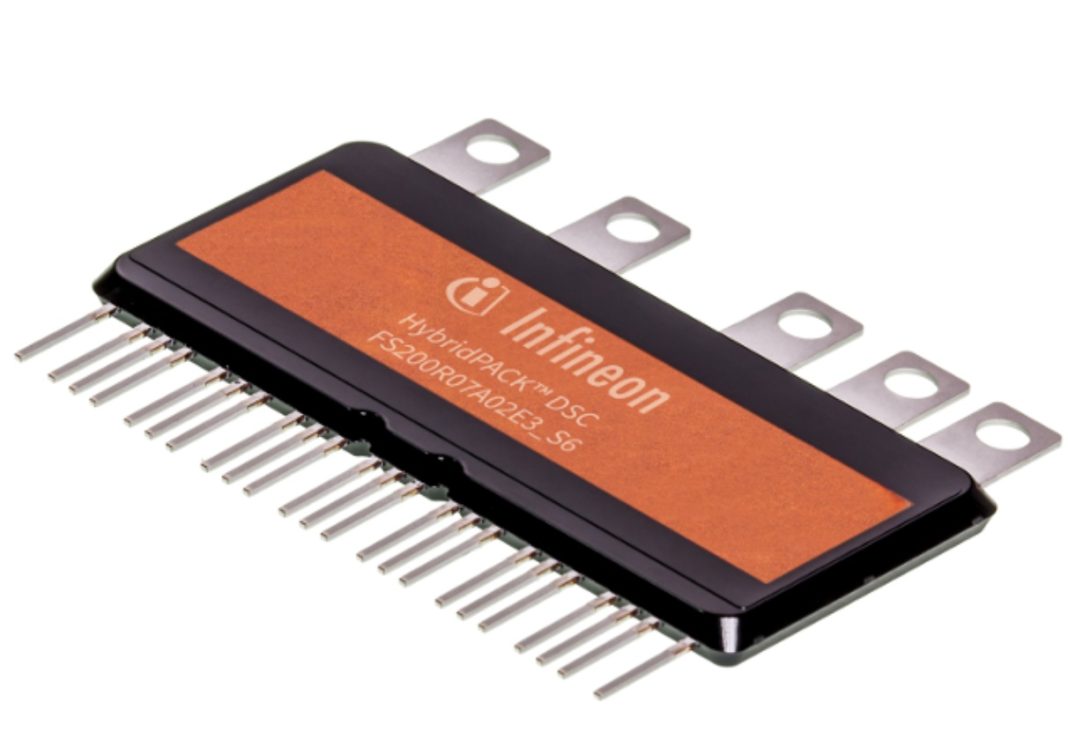
Infineon’s latest EDT3 IGBT chip technology is now integrated into the HybridPACK Drive G2 automotive power module, delivering enhanced performance and capabilities across the module portfolio. This module offers a power range of up to 250 kW within the 750 V and 1200 V classes, enhanced ease of use, and new features such as an integration option for next-generation phase current sensors and on-chip temperature sensing, contributing to system cost improvements.
All chip devices are offered with customized chip layouts, including on-chip temperature and current sensors.