
Building EV platforms and skateboard architectures requires manufacturers and engineers to deal with multiple engineering concepts covering mechanical, electrical, thermal, software, and manufacturing. It’s not about building isolated components and assembling them in the final stage to make the complete product, but designing each system step-by-step from scratch and updating the existing system to achieve industry-level accuracy.
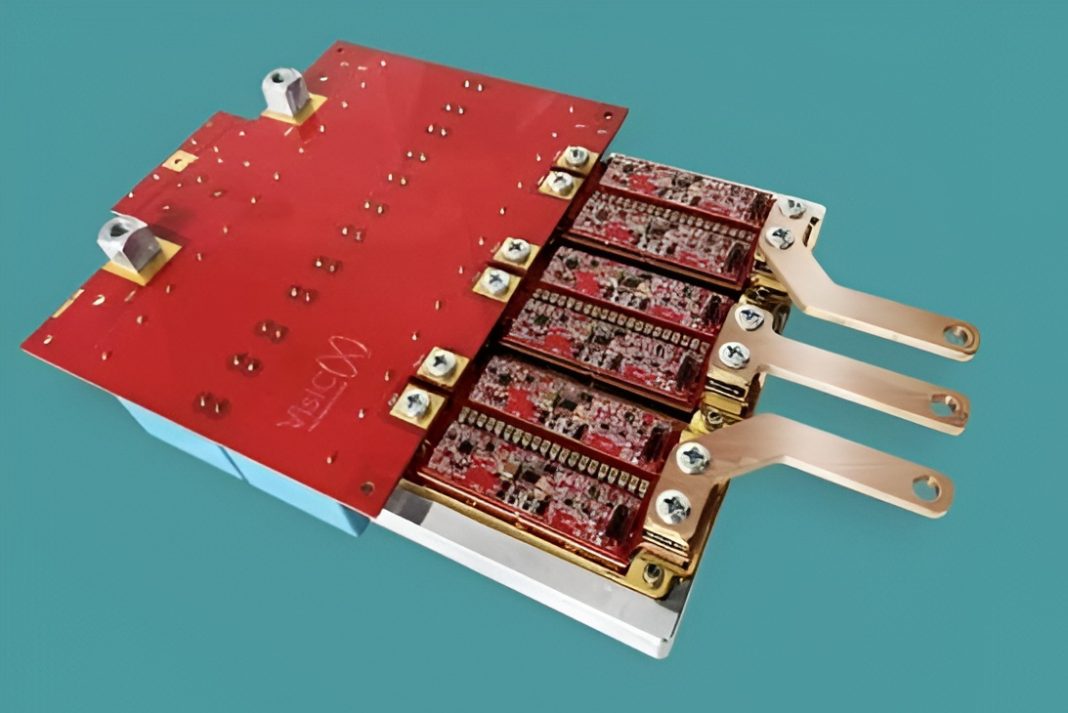
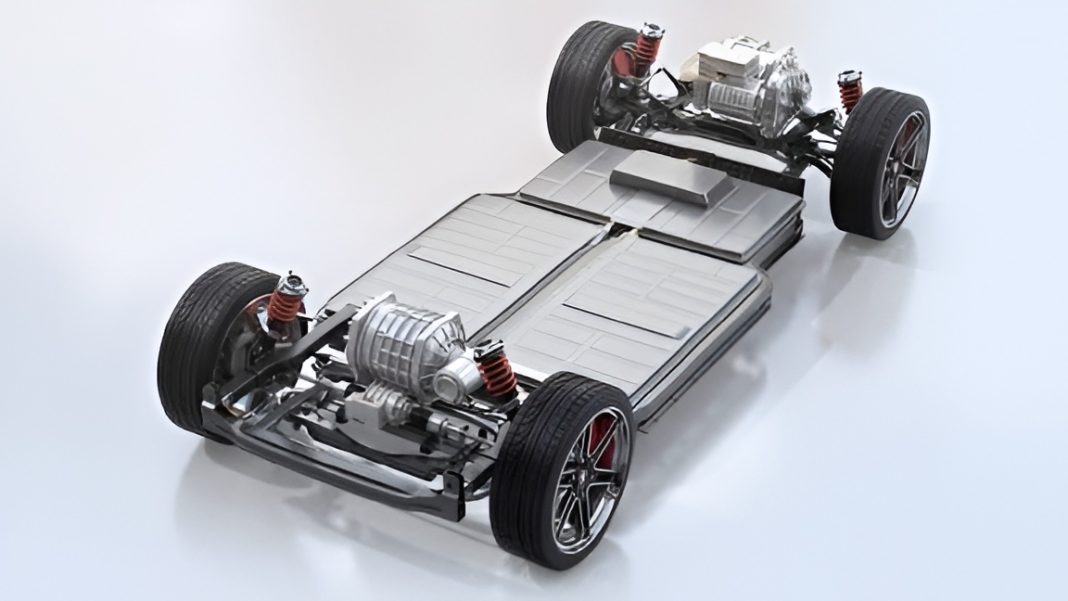
An EV platform is a compact system that forms the entire base of the car consisting of a combined package of software and hardware units such as battery packs, electric motors, power electronics, battery management system (BMS), and electric control unit (ECU) architecture. It performs different functions from generating power from the battery to distributing power within an electric vehicle (EV).
A skateboard architecture is defined as a complete physical skeletal framework that supports the mechanical movements of an electric vehicle. It is a part of the EV platform upon which different performance attributes depend, such as, car safety, cabin space, design, and the car’s centre of gravity. Lowering the vehicle’s centre of gravity will improve its cornering stability, handling, and rollover resistance.
EV platform and skateboard architecture define the car’s entire layout. These two concepts define the overall performance of the car. Many global manufacturing companies design and build EV platforms and skateboard architectures. Given below is the list of top 10 companies related to this category:
Tesla
Founded in 2003 by Martin Eberhard and Marc Tarpenning, the company carries the vision of proving electric cars could also be high-performance, desirable, and superior to gasoline-powered vehicles. Tesla popularised and commercialised skateboard architecture design by placing the heavy battery pack into the floor with a compact electric motor.
Volkswagen Group (MEB & PPE Platforms)
This company developed the Modular Electric Drive Matrix (MEB), and redesigned the skateboard architecture by creating a single, highly flexible, and dedicated architecture that eliminates the engineering compromises of retrofitting combustion-engine cars, making electric vehicles affordable. This design was adopted by many car manufacturing companies such as Audi, Skoda, Cupra, etc.
General Motors (Ultium)
This company developed and introduced the modular Ultium Platform to solve major electric vehicle challenges such as high production costs, low driving range, and inflexibility such as, rigid battery shapes, complex wiring clutter, and design limitations. Because of this architecture, cells can be stacked either vertically or horizontally inside battery packs, allowing the company to scale battery capacities from 50 kWh to over 200 kWh.
Rivian
This is an American electric vehicle (EV) manufacturing company founded in 2009 by CEO RJ Scaringe. It became strong player in EV manufacturing by engineering a self-contained and high-strength skateboard architecture that integrates all heavy components – the battery packs, drive units, suspension, and braking into a single floor assembly. This company also introduced quad-motor skateboard architecture, integrating four independent electric motors (one per wheel) powering its all-electric adventure trucks, SUVs, and commercial delivery vans.
Hyundai Motor Group (E-GMP)
This company is the inventor of the dedicated Electric-Global Modular Platform (E-GMP) that supports 800V architecture, enabling ultra-fast charging from 10% to 80% in about 18 minutes. It also supplies its charging solutions across different EV manufacturing brands such as Hyundai, Kia, and Genesis.
Canoo
Canoo is an American-based company headquartered in Texas. This company builds complete electric vehicles and sub parts mostly related to skateboard architecture. The categories in manufactured units cover Lifestyle Vehicle, Multi Purpose Delivery Vehicle, and Pickup Truck. This company is known for its innovative concepts which include functional integration that allows battery packs, motors, suspension, and crash barriers to be integrated into a slim, self-contained chassis to maximise interior space.
REE Automotive (REEcorner)
This company is known for its REEcorner system, which combines steering, braking, suspension, and the powertrain into a single compact module inside each wheel arch. This design creates a completely flat and modular skateboard chassis to maximise cargo and battery space. Each REEcorner operates independently with its own electronic control unit (ECU), coordinated centrally by a REEcenter ECU.
Foxconn (MIH Platform)
Foxconn builds electric cars, buses and SUVs, for its partners rather than selling the vehicles under its own brand name. Foxconn’s MIH (Mobility in Harmony) is an open-source platform designed to provide standardised and customisable hardware modules for its partners to shorten the development cycle of electric vehicles. The platform is an open-source software and hardware ecosystem that also provides autonomous driving and AI support.
Mahindra & Mahindra (INGLO)
INGLO is Mahindra’s EV platform dedicated to building skateboard architecture for next-generation electric SUVs. The name INGLO itself reflects the blueprint: INdia + GLObal to engineer the core safety and performance to meet the demands for future EVs at a global scale, while keeping the cost structure reasonable as per the Indian market. The company has achieved major success in sales and commercialisation by integrating this module in its premium models like BE 6, XEV 9e, and XEV 9S.
Bollinger Motors
This company earlier focused on developing all-electric off-road passenger vehicles before moving to commercial electric trucks. This company does not manufacture units under its own brand name; instead, it built its skateboard foundation around heavy payload capacities and solid rear-axle E-drives.
Conclusion
Modular EV platform and skateboard architecture represent the backbone of electric vehicles. They play a very important role in handling the vehicle, managing interior space, and acting as a strong base for SUVs, commercial vans, and trucks. A well-designed skateboard architecture significantly reduces development cost and time. By arranging batteries, motors, and power electronics into a standardised, low-profile chassis, automakers can maximise cabin space, improve vehicle safety, and enhance overall vehicle performance.