
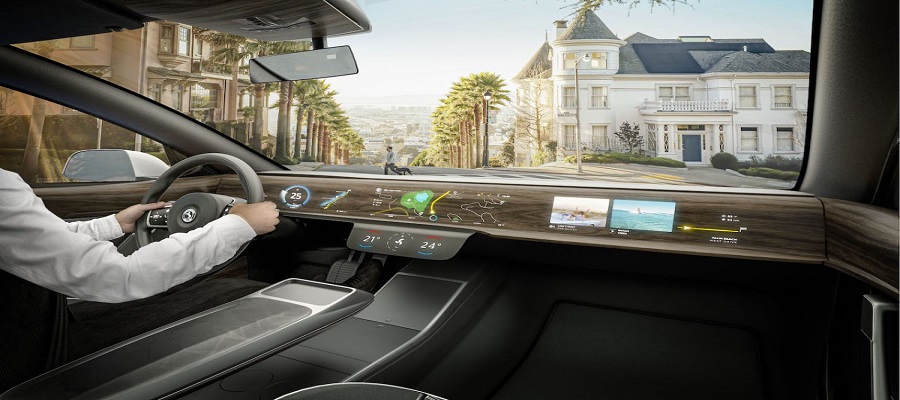

A research study conducted on behalf of Qt Group revealed that vehicle manufacturers are allocating their development budgets towards enhancing user interfaces and the user experience (UI/UX) to improve their competitiveness. The study found that over half of the respondents (52%) intend to dedicate at least 30% of their product development budget towards enhancing UI/UX in vehicles within the next 12 months. Additionally, 23% of the respondents plan to invest between 40-49% of their budget in UI/UX. In comparison, only 25% of the respondents allocated more than 30% of their budget to UI/UX in the previous year, indicating a growing acknowledgement of the connection between UI/UX and business success.

Nevertheless, survey respondents indicate that macroeconomic factors, including a global economic downturn and inflation, have had adverse effects on their product development within the automotive industry. Approximately 36% of automotive OEMs report a decline in profit margins, while 43% have been compelled to raise their product prices.
Miao Luo, the head of automotive and design at Qt Group, stated that despite facing financial limitations, the ongoing digitalization of vehicles, as exemplified by the development of driverless cars, augmented reality, and immersive user experiences, is driving original equipment manufacturers (OEMs) to assume complete responsibility for the entire software stack within vehicles. This trend of wanting to have control over their platforms is likely the reason behind the observed increase in spending on UI/UX. It serves as a clear demonstration of how integral software and the car’s human-machine interface (HMI) have become to the automotive sector and its progression.
Despite the notable challenges faced by automakers, the pace of innovation in the industry remains rapid. Surprisingly, 27% of automotive manufacturers highlighted the innovation from their competitors as a major driving force behind their investments in enhancing UI/UX. Among the technologies receiving the most investment for the development or improvement of UI/UX in vehicles are digital twin technology (32%), virtual assistants (29%), companion devices (27%), companion apps (23%), and augmented reality/virtual reality (AR/VR) (23%).
A significant finding from the survey is that 34% of respondents identified the management of software maintenance and update requirements as a prominent obstacle in delivering innovative UI/UX. To address the software demands of their vehicles, automotive OEMs are increasingly adopting advanced computing platforms and devices. Some are even leveraging consumer-grade system-on-chips and operating systems. However, with multiple diverse systems involved, OEMs are encountering the challenge of effectively integrating and consolidating all the software components within the vehicle cockpit.
In order to address this challenge, automotive respondents have identified various solutions. To increase operational efficiencies and streamline software updates and deployment across multiple environments, 26% of respondents are adopting cross-platform development tools. Another 30% are opting to rewrite software, while 34% are focusing on streamlining their product lines. These strategies aim to mitigate the challenges associated with managing software maintenance and updates while enhancing overall performance and effectiveness in the automotive industry.

 to improve their competitiveness.)