
If you’re investing in a life-changing product such as an electric vehicle, it’s good to know exactly how it works. The technology behind electric and hybrid cars can be a bit baffling, but we think it’s worth understanding the details so you can drive away confident, knowing that you’ve made the right decision.
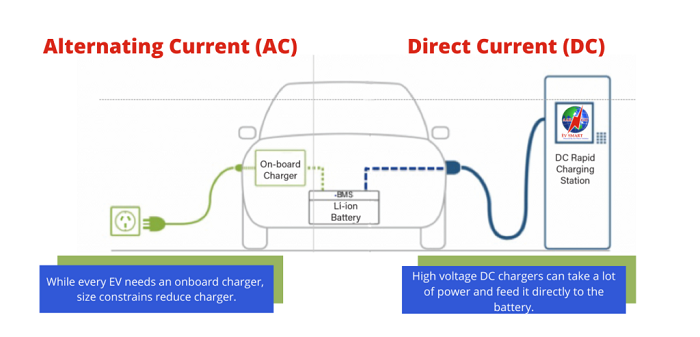
Essentially, an electric vehicle (EV) has a battery instead of a petrol tank, and an electric motor instead of an internal combustion engine. The electricity stored in its battery powers the electric motor. When too low, the car’s battery needs to be recharged by plugging it in to use grid electricity, like when your phone needs charging. Similarly, Plug-in hybrids (PHEVs) come with a plug socket and charging leads so that you can charge the battery via the mains. Although they have a smaller capacity, these models are able to run in electric-only mode for 20-30 miles.
An amazing perk of EVs is that they can be charged at home if you have a home charging unit installed, saving you the usual trips to the nearest petrol station or charging point. The thing that really swings most people when it comes to EVs is that they’re much cleaner, producing no tailpipe emissions whatsoever.
Their green credentials are not the only thing that convinces people to go electric. A lot of EVs now offer really advanced technology that further reduces running costs and helps save you energy.
Lots of models, such as the Nissan Leaf, turn off the engine when stopped, and actually charge the battery when you brake – this is called ‘regenerative braking. This technology is also seen in hybrid models and it helps to power the electric motor without needing to plug it in to charge, so you can go further without using the petrol engine.
Pioneering manufacturers stocked here at Wilsons, such as Nissan, Renault and Tesla, are constantly re-engineering and refining their batteries for bigger driving ranges.
In terms of control, you can pre-condition the car’s temperature, set the charge start and stop time, enjoy heated seats and steering wheels, and even decide on a battery percentage so that your car knows exactly how much it needs to charge before you drive it.
But what about the driving experience? This is where a lot of EVs really come into their own. Not only does the technology behind an EV make for a really intuitive car, but the electric motor also provides almost instant torque, making them quicker, lighter, and ultimately more enjoyable to drive. They’re also quieter than traditional cars and able to accelerate extremely quickly, so you’re not going to be left behind at any traffic lights.