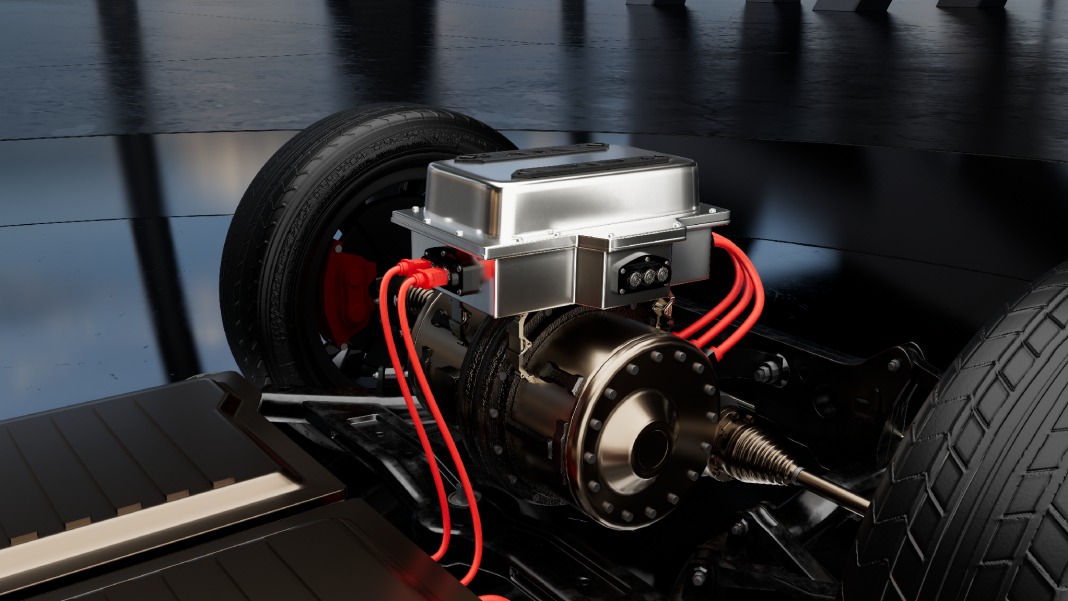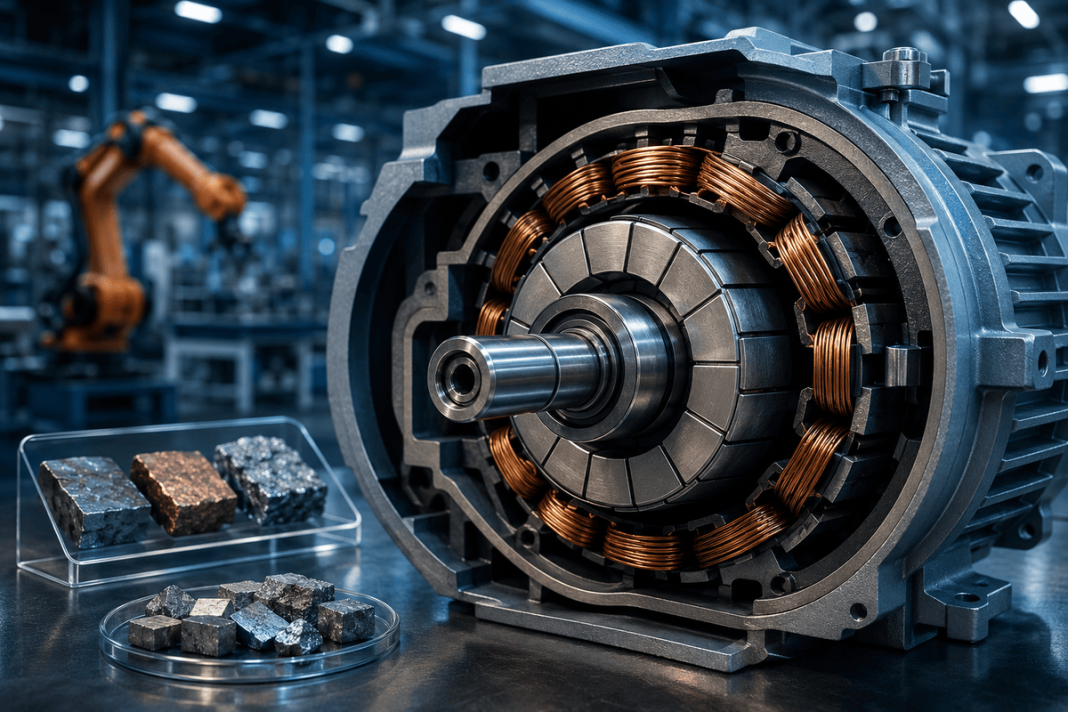
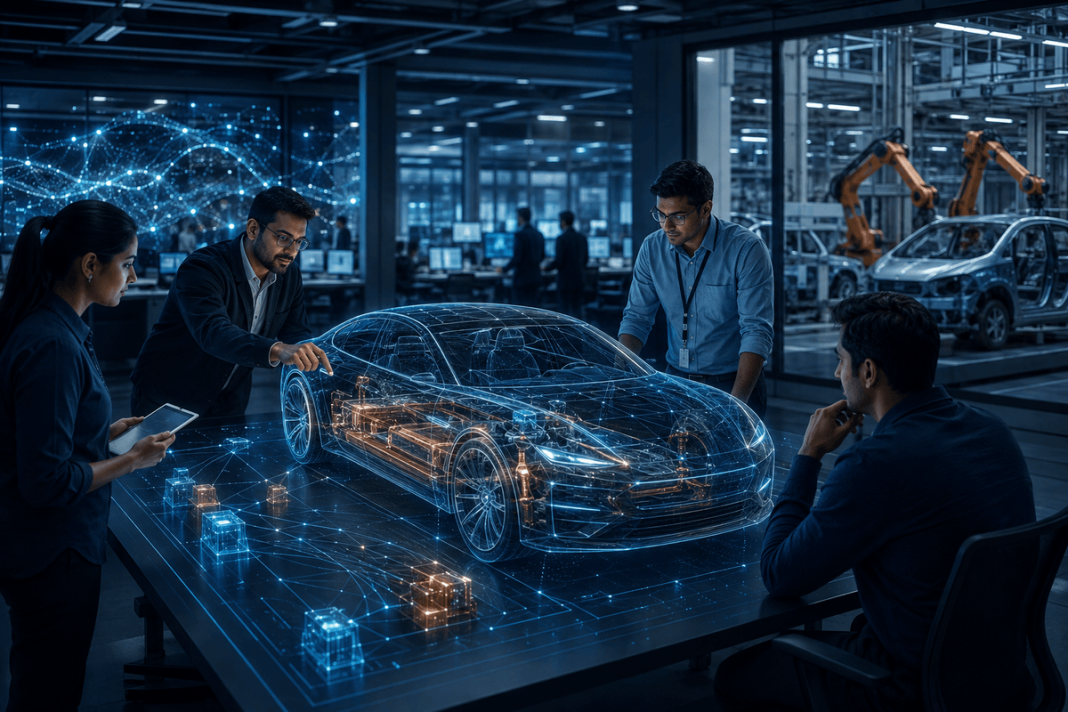

India’s Rs 7,280-crore rare-earth magnet push could redraw the EV motor, materials and powertrain supply chain. For years, the electric-vehicle conversation has revolved around batteries: cell chemistry, energy density, charging speed, localisation and recycling. That focus is justified—but it has also left another strategic component in the shadows. Inside many high-performance EV traction motors sits a relatively small quantity of rare-earth permanent magnets, and those magnets can have an outsized influence on efficiency, torque density, packaging and supply security.
India is now attempting to bring that hidden dependency into the centre of its industrial strategy. In August 2026, the Ministry of Heavy Industries said it had received 20 bids through a global tender for a ₹7,280-crore scheme to establish integrated manufacturing of sintered neodymium-iron-boron rare-earth permanent magnets. The programme targets 6,000 metric tonnes of annual capacity and is designed to support up to five beneficiaries, each with a maximum allocation of 1,200 tonnes per year.
The strategic question is no longer only who assembles the motor. It is who controls the materials, processes and intellectual property that determine motor performance
Why The Magnet Matters
Many electric passenger vehicles use permanent-magnet synchronous motors because they combine high power density with strong efficiency across a useful operating range. That can translate into a compact motor, lower mass and more kilometres from a given battery pack. In a vehicle where every kilogram and every percentage point of efficiency matters, the magnet is not a commodity detail; it is a performance-enabling component.
Yet the supply chain is specialised and concentrated. Producing an automotive-grade magnet involves far more than mining an ore. The chain includes separating and refining rare-earth oxides, converting them into metals and alloys, producing tightly controlled powders, pressing and sintering, machining, coating, magnetising, testing and integrating the finished magnet into a rotor. Small variations in composition, grain structure, coating quality or thermal behaviour can affect long-term reliability.
That is why the Indian scheme’s integrated scope matters. It covers the journey from neodymium-praseodymium oxide to finished magnets rather than rewarding only the final conversion step. The seven-year framework—two years for establishing production and five years of sales-linked incentives—also recognises that this capability will take time to qualify and scale.
The Opportunity is Larger Than a Magnet Factory
A domestic magnet industry could create several layers of opportunity for the automotive ecosystem. Materials companies can build competence in refining, alloys and recycling. Equipment suppliers can localise furnaces, powder-processing systems, coating lines and precision inspection. Motor manufacturers can co-design magnets, rotors, cooling systems and control strategies for Indian duty cycles. Testing organisations can develop methods for thermal ageing, corrosion resistance, demagnetisation and traceability.
For OEMs and Tier-1 suppliers, the biggest gain may be engineering proximity. A local supplier that can work alongside a motor-design team is more valuable than a distant source selling a catalogue grade. Co-development can reduce material usage, improve manufacturability and create magnet specifications aligned with the vehicle’s real performance envelope instead of its theoretical maximum.
Recycling is another strategic layer. End-of-life motors, industrial equipment and manufacturing scrap contain recoverable rare-earth material. A closed-loop chain could reduce exposure to virgin imports while improving the economics and environmental performance of domestic magnet production. Designing motors for disassembly and material recovery should therefore begin now, not after India’s first large volumes reach end of life.
Rare-earth Resilience Also Means Motor Diversity
Local magnet capacity should not be confused with a decision that every EV must use the same motor architecture. Induction motors avoid permanent magnets but can carry efficiency and cooling trade-offs. Switched-reluctance motors promise robust, magnet-free construction, although noise, vibration and control complexity require careful engineering. Ferrite-assisted designs can reduce rare-earth content, while motor controls and thermal systems can help designers extract more performance from less critical material.
The strongest strategy is therefore two-track: build domestic competence in high-performance magnets while accelerating alternative motor architectures and material-thrifty designs. That creates options when prices move, export controls change or a particular vehicle programme demands a different balance of cost, performance and risk.
From Localisation to Competitive Advantage
India’s 6,000-tonne target will not, by itself, eliminate global dependence. Nor will the first factory automatically deliver automotive qualification, yield, consistency and cost competitiveness. Those outcomes require patient collaboration across materials science, process engineering, motor design, validation and procurement.
But the direction is strategically important. The EV value chain is moving beyond visible components such as cells and chargers into the less visible technologies that decide efficiency, reliability and manufacturability. If India can connect rare-earth processing with precision magnet production, recycling and indigenous motor engineering, the magnet could move from a potential bottleneck to a genuine source of powertrain advantage.