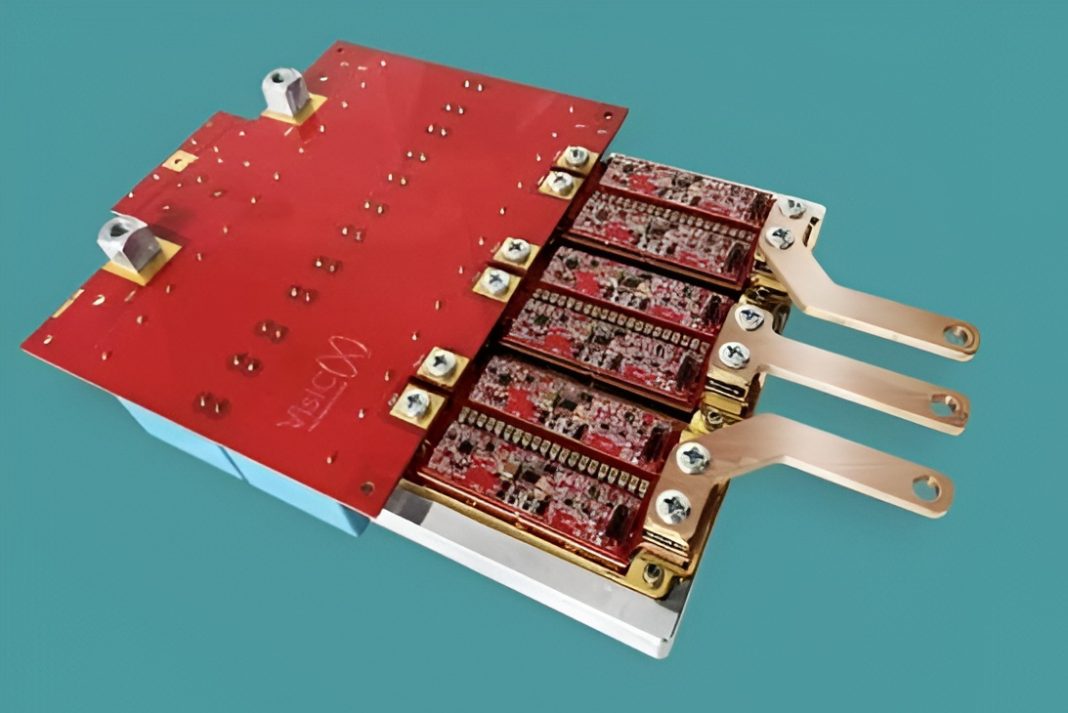

Hillcrest Energy Technologies, a Canadian clean technology company specializing in manufacturing high-performance power conversion devices and digital control systems, has reported a major development towards a zero-voltage switching (ZVS) inverter. The company has reduced motor-terminal voltage overshoot by more than 90% compared to a conventional hard-switched silicon carbide (SiC) inverter.
Reducing motor-terminal voltage overshoot extends motor’s insulation life, reduces electromagnetic interference (EMI), decreases motor heating, and enables safe deployment of fast-switching, high-efficiency power devices. The detailed findings of the research were presented at the IEEE Energy Conversion Congress and Expo (ECCE 2026). The event was held from October 4 to 8, 2026, in Vancouver, BC, Canada.
ZVS Technology Addresses Motor Insulation Stress
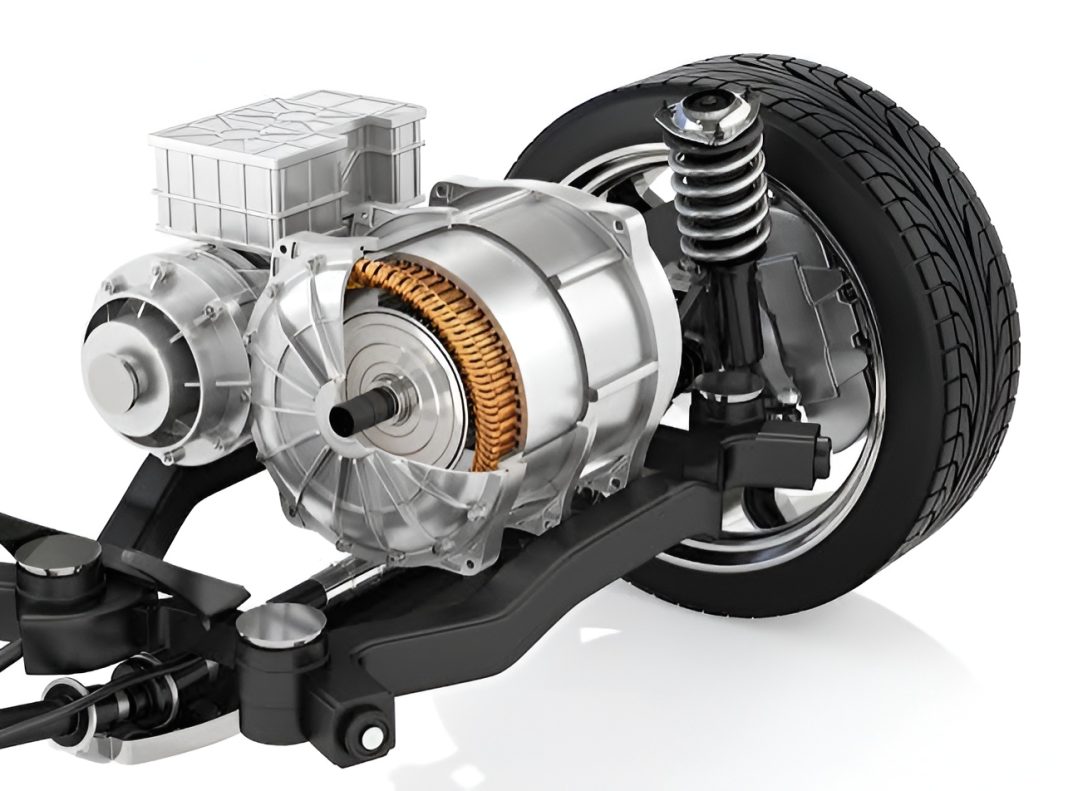
The primary role of the traction inverter is to convert direct current (DC) from the battery into controlled, multi-phase alternating current (AC) to drive the electric motor. Traditional SiC semiconductors enable fast switching operations resulting in voltage spikes between the inverter, connecting wires, and motor. These voltage spikes put additional stress on the motor’s insulation system and increase the risk of premature failure.
Hillcrest’s ZVS technology addresses this challenge by using a smart method for switching the electric current on and off. It allows switching operations between semiconductor devices when the voltage across them is close to zero. This approach slows voltage transitions and reduces overshoot without depending on additional filtering components which add to the system’s volume, cost, and power losses.
This technology could help EV manufacturers to deal with the problem of motor insulation reliability and electromagnetic interference instead of relying on large-sized filtering solutions. The final validation of these results will be seen when the technology moves towards the development phase and yields a positive impact on the vehicle’s long-term reliability.