Vicor to present high-performance modular power conversion solutions for xEVs at WCX 2023

High-density, scalable, modular power systems solve electrification power conversion challenges

As the automotive industry rapidly moves toward fully electric vehicles with higher-voltage and higher power requirements, power system design engineers are looking for power conversion solutions that have high density, low weight and are scalable across platforms.

Vicor will present four papers at the premiere global automotive engineering event, World Congress Experience 2023 (WCX) in Detroit on April 18 – 20, describing innovative approaches to xEV power conversion using its high-density, scalable, modular power system technology.

The Vicor papers are:

  • Reducing Range Anxiety by Reducing Harness Weight Using Power Modules
    Presented by: Nicolas Richard, Director Automotive Sales and Field Applications, Vicor EMEA
  • Managing High-Voltage Line Ripple Rejection with High-Bandwidth DC-DC converters
    Presented by: Haris Muhedinovic, Automotive Principal Field Applications Engineer, Vicor

Ranya Badawi, Power Converter Engineer, General Motors
Contributor: Steve Wybo, Technical Specialist, Power Electronics, General Motors

  • The Transition to 800V Electric Vehicles: Bidirectional Conversion Between 800V and 400V
    Presented by: Matt Jenks, North American Director of Automotive, Vicor
  • Building Redundancy in an Electrical System that Power 400V or 800V Electric Vehicles
    Presented by: Patrick Kowalyk, Automotive Principal Field Applications Engineer, Vicor
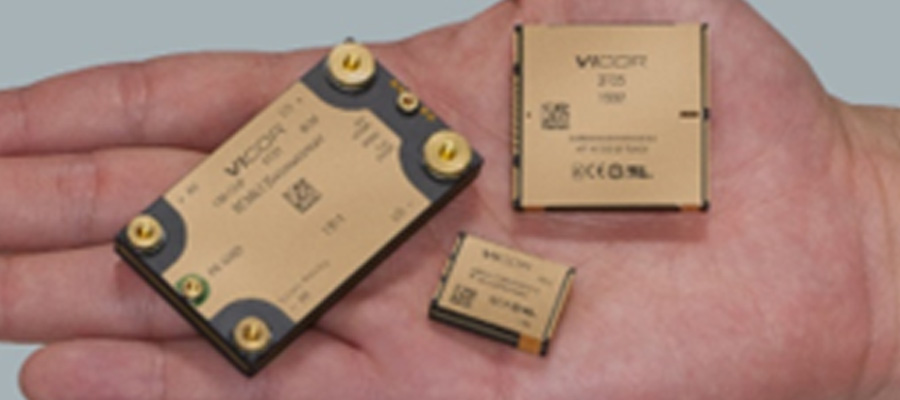
Reduced size and weight are necessary for next generation xEV platforms. Vicor modules provide the highest power density and most efficient power distribution for EVs.

Hot this week

L&T Technology Services Introduces SDVault.ai, an AI-Powered Toolchain for Software-Defined Vehicles

L&T Technology Services announced the launch of SDVault.ai on...

EV Efficiency Explained: Wh/km, Regenerative Braking, Aerodynamics and Thermal Losses

Electric vehicles (EVs) are mobility products powered partially or...

CATL Explores Lithium-Air Battery Technology to Advance Next-Generation Electric Vehicles

​CATL, the world’s largest manufacturer of energy storage batteries,...

KAIST Develops Semiconductor-Based Interface Technology to Extend Anode-Free EV Battery Life

Researchers from the Korea Advanced Institute of Science and...

GÖPEL Electronic Joins Automotive SerDes Alliance to Support ASA-ML Automotive Networking

High-speed communication technologies are becoming increasingly important in modern...

Topics

EV Efficiency Explained: Wh/km, Regenerative Braking, Aerodynamics and Thermal Losses

Electric vehicles (EVs) are mobility products powered partially or...

CATL Explores Lithium-Air Battery Technology to Advance Next-Generation Electric Vehicles

​CATL, the world’s largest manufacturer of energy storage batteries,...

KAIST Develops Semiconductor-Based Interface Technology to Extend Anode-Free EV Battery Life

Researchers from the Korea Advanced Institute of Science and...

GÖPEL Electronic Joins Automotive SerDes Alliance to Support ASA-ML Automotive Networking

High-speed communication technologies are becoming increasingly important in modern...

Hyundai Motor Group Outlines AI-Driven Roadmap for Electric and Autonomous Vehicle Technologies

​Hyundai Motor Group showcased its future mobility technology at...

Infineon and Qualcomm Partner to Advance Central Computing for Software-Defined Vehicles

​Infineon and Qualcomm Technologies have signed a collaboration agreement...

Related Articles

Popular Categories