US researchers design Superfast Battery Charging methods

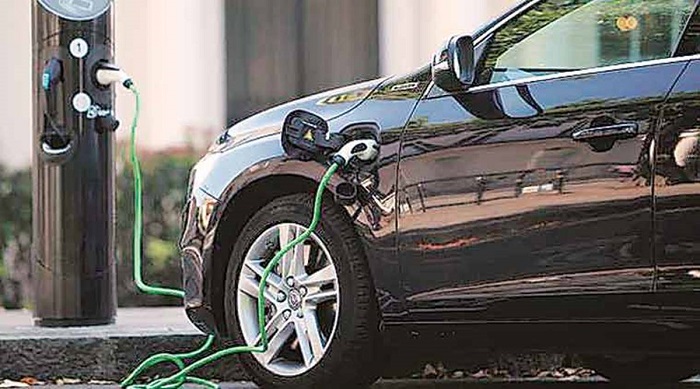
A team of US researchers has designed superfast charging methods tailored to power different types of electric vehicle batteries in 10 minutes or less without harm.

Charging the lithium-ion batteries that fuel electric vehicles is a delicate balancing act. One solution is to tailor the charging protocol in a way that optimizes speed while avoiding damage to the many different types of battery designs currently used in vehicles.

Eric Dufek, department manager for the Energy Storage and Electric Transportation Department at Idaho National Laboratory in the US, and his research team reported the use of machine learning techniques that incorporate charging data to create unique charging protocols.

“Fast charging is the key to increasing consumer confidence and overall adoption of electric vehicles,” said Dufek. “It would allow vehicle charging to be very similar to filling up at a gas station,” he said at the meeting of the American Chemical Society (ACS).

By inputting information about the condition of many lithium-ion batteries during their charging and discharging cycles, the scientists trained the machine learning analysis to predict lifetimes and the ways that different designs would eventually fail.

The team then fed that data back into the analysis to identify and optimize new protocols that they then tested on real batteries. “We’ve significantly increased the amount of energy that can go into a battery cell in a short amount of time,” said Dufek.

“Currently, we’re seeing batteries charge to over 90 percent in 10 minutes without lithium plating or cathode cracking.” The researchers plan to use their model to develop even better methods and to help design new lithium-ion batteries that are optimized to undergo fast charging.

Hot this week

L&T Technology Services Introduces SDVault.ai, an AI-Powered Toolchain for Software-Defined Vehicles

L&T Technology Services announced the launch of SDVault.ai on...

EV Efficiency Explained: Wh/km, Regenerative Braking, Aerodynamics and Thermal Losses

Electric vehicles (EVs) are mobility products powered partially or...

CATL Explores Lithium-Air Battery Technology to Advance Next-Generation Electric Vehicles

​CATL, the world’s largest manufacturer of energy storage batteries,...

KAIST Develops Semiconductor-Based Interface Technology to Extend Anode-Free EV Battery Life

Researchers from the Korea Advanced Institute of Science and...

GÖPEL Electronic Joins Automotive SerDes Alliance to Support ASA-ML Automotive Networking

High-speed communication technologies are becoming increasingly important in modern...

Topics

EV Efficiency Explained: Wh/km, Regenerative Braking, Aerodynamics and Thermal Losses

Electric vehicles (EVs) are mobility products powered partially or...

CATL Explores Lithium-Air Battery Technology to Advance Next-Generation Electric Vehicles

​CATL, the world’s largest manufacturer of energy storage batteries,...

KAIST Develops Semiconductor-Based Interface Technology to Extend Anode-Free EV Battery Life

Researchers from the Korea Advanced Institute of Science and...

GÖPEL Electronic Joins Automotive SerDes Alliance to Support ASA-ML Automotive Networking

High-speed communication technologies are becoming increasingly important in modern...

Hyundai Motor Group Outlines AI-Driven Roadmap for Electric and Autonomous Vehicle Technologies

​Hyundai Motor Group showcased its future mobility technology at...

Infineon and Qualcomm Partner to Advance Central Computing for Software-Defined Vehicles

​Infineon and Qualcomm Technologies have signed a collaboration agreement...

Related Articles

Popular Categories